

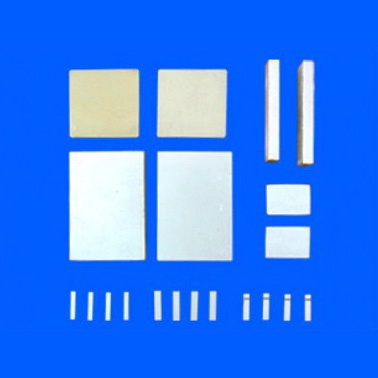
For quality control and safety managers, the core search intent behind “what standards apply to medical piezoelectric ceramic components” is practical compliance guidance. They are not looking for a general explanation of piezoelectric ceramics. They want to know which standards, test controls, and documentation expectations actually matter when sourcing, qualifying, or auditing components used in medical devices, and how those requirements affect product safety, regulatory readiness, and supplier selection.
What this audience cares about most is risk reduction. They need to confirm whether a supplier can deliver stable material performance, controlled manufacturing, traceable batches, suitable cleanliness, and documentation that supports medical device compliance. They also want to understand where component-level standards end and where device-level regulatory obligations begin, because this affects incoming inspection, supplier approval, and quality agreements.
The most useful content for them is a structured explanation of the applicable framework: quality management standards such as ISO 13485, risk management under ISO 14971, biocompatibility considerations under ISO 10993 when patient contact is possible, electrical and safety relevance tied to the finished device, material restrictions such as RoHS or REACH where applicable, and process controls including lot traceability, performance testing, reliability verification, and change control. They also need a practical way to evaluate suppliers beyond marketing claims.
The article should therefore emphasize standards interpretation, qualification criteria, documentation requirements, inspection and testing expectations, and supplier assessment methods. It should downplay broad theory about how piezoelectric materials work, because that does little to help QC or safety teams make approval decisions.
What Standards Apply to Medical Piezoelectric Ceramic Components?
For quality control and safety managers, the short answer is that no single standard governs all medical piezoelectric ceramic components. The applicable requirements depend on how the component is used, whether it contacts the patient, and how it affects the safety and performance of the finished medical device.
In practice, medical piezoelectric ceramic components are usually assessed through a combination of quality management, material control, risk management, traceability, and application-specific testing requirements. The component itself may not be “certified” under one universal medical piezoelectric standard, but it must fit into a compliant device manufacturing and verification framework.
This distinction matters. A piezoelectric ceramic element used in an ultrasonic sensor, imaging transducer, flow measurement device, or surgical system may face different evidence requirements depending on its role. That is why QC and safety teams need to focus on standards that govern supplier systems, material consistency, process control, and documentation quality.
Start with the Quality Management System, Not Just the Material
The first standard many buyers and auditors look for is ISO 13485. This is the core quality management standard for medical devices and related supply chains. A component manufacturer supplying parts for medical applications is far more credible when its processes align with ISO 13485 principles, even if the exact certification scope should always be verified.
For safety and quality teams, ISO 13485 matters because it signals structured control over documentation, training, purchasing, production, inspection, nonconformance handling, corrective action, and traceability. These are not abstract management topics. They directly affect whether a piezoelectric ceramic batch performs consistently in a regulated device environment.
If a supplier does not operate under a medical-grade quality system, the burden shifts to the device manufacturer. That usually means more incoming inspection, more validation work, more supplier oversight, and higher regulatory risk. In other words, the absence of a robust quality system often raises cost and uncertainty downstream.
Even where ISO 9001 is present, QC managers should understand that it is not equivalent to ISO 13485 for medical use. ISO 9001 demonstrates general quality management discipline, but medical applications often require tighter control over records, process changes, contamination risk, and traceability than general industrial quality systems provide.
Risk Management Requirements Often Drive the Real Standard Set
ISO 14971 is another key reference because it shapes how medical device companies evaluate component-related hazards. A piezoelectric ceramic component may introduce risks linked to material failure, unstable output, depolarization, overheating, bonding failure, electrical leakage, or inaccurate sensing behavior. These risks need to be understood at the component selection stage.
From a supplier qualification perspective, this means the most valuable partner is not simply one that offers technical data, but one that can support risk evaluation with stable specifications, failure mode awareness, and controlled manufacturing data. QC and safety managers should look for evidence that the supplier understands how component variation can affect device-level risk.
This is especially important for ultrasonic and sensing applications. A small drift in resonant frequency, capacitance, coupling factor, or mechanical integrity may not matter in a low-risk industrial product, but in a medical setting it can affect detection sensitivity, dosing precision, or output consistency. Risk management therefore becomes a practical filter for defining acceptance criteria.
Biocompatibility May Apply, But Only in Certain Use Cases
One common area of confusion is ISO 10993, the biocompatibility standard series. Not every medical piezoelectric ceramic component must meet biocompatibility testing on its own. The requirement depends on whether the component, its coatings, adhesives, housing materials, or residues can directly or indirectly contact the patient.
If the piezoelectric ceramic is fully enclosed within the device and isolated from patient contact, biocompatibility concerns may shift to the enclosure or patient-contacting materials instead. However, if the ceramic element is part of a probe, sensor assembly, or other system where exposure is possible, then material compatibility and extractables risk become more important.
QC and safety teams should therefore avoid asking only whether the ceramic is “biocompatible.” The better question is whether the full material stack for the intended application has been evaluated appropriately. That includes electrodes, coatings, encapsulants, soldering materials, bonding layers, and cleaning residues, not just the ceramic body itself.
This is also where supplier transparency matters. A technically strong supplier should be able to disclose relevant material information, support restricted substance review, and clarify what has and has not been tested. That helps medical manufacturers avoid false assumptions during design transfer and regulatory submission.
Electrical and Device Safety Standards Still Matter at Component Level
Although standards such as IEC 60601 are mainly applied to finished medical electrical equipment, component quality strongly affects compliance outcomes. Piezoelectric ceramic components used in transducers, alarms, pumps, imaging systems, or measurement devices can influence insulation design, thermal behavior, acoustic output, and long-term reliability.
For QC personnel, this means component qualification should consider more than nominal electrical properties. The review should also ask how the component behaves under operating voltage, repeated drive cycles, temperature variation, humidity exposure, sterilization conditions where relevant, and mechanical stress in assembly and use.
Safety managers should also pay attention to failure containment. If a piezoelectric element cracks, delaminates, loses polarization, or shifts frequency under load, what is the effect on the device? Can the failure create unsafe output, false readings, overheating, or unexpected shutdown? These questions connect component control directly to device safety obligations.
Material Compliance and Environmental Restrictions Cannot Be Ignored
Medical buyers also need to review environmental and chemical compliance requirements, even when these are not the primary medical standards. Depending on market and device category, this may include RoHS, REACH, and declarations related to restricted substances or substances of very high concern.
This issue is especially relevant for piezoelectric ceramics because many formulations have historically relied on lead-containing materials such as PZT. In many applications, lead-based piezoelectric ceramics are still used because of their performance advantages, but their use must be assessed within the legal and market-specific compliance context.
That does not automatically make such materials unsuitable for medical use. It does mean QC and compliance teams need clear documentation on composition, exemption status where applicable, and controls that prevent undocumented material substitutions. A supplier that cannot provide precise material declarations creates unnecessary regulatory exposure.
What QC Teams Should Verify in Incoming and Supplier Qualification
For medical piezoelectric ceramic components, effective quality control starts with measurable acceptance criteria. These typically include dimensional tolerances, resonant frequency, impedance characteristics, capacitance, dielectric loss, electromechanical performance, visual integrity, electrode quality, and packaging condition after transport.
However, good incoming inspection is only part of the picture. For safety-critical or performance-sensitive applications, QC teams should also review batch-level consistency data, process capability where available, and evidence of control over firing, polarization, machining, metallization, and assembly steps that influence final performance.
Traceability is another major checkpoint. Each batch or lot should be linked to production records, raw material sources, processing conditions, inspection results, and nonconformance history. When a field issue occurs, traceability determines whether the problem can be contained quickly or becomes a broader recall and investigation burden.
Supplier change control should be reviewed with the same seriousness. Seemingly small changes in ceramic formulation, sintering profile, electrode paste, bonding method, or subcontracted processing can alter medical device behavior. QC managers should require notification rules and requalification triggers in the supplier quality agreement.
Reliability Testing Matters More Than One-Time Conformance
A piezoelectric ceramic component that meets specification on the day of shipment may still fail the needs of a medical device if long-term stability is weak. That is why reliability verification deserves more attention than many sourcing teams initially give it.
Relevant evaluations may include thermal cycling, humidity exposure, aging drift, high-drive endurance, vibration resistance, bonding durability, sterilization compatibility if applicable, and storage stability. The exact test plan depends on the application, but the principle is constant: one-time pass results are not enough for medical use.
For quality and safety managers, the key question is whether the supplier can provide evidence that performance remains within acceptable limits over time and under realistic conditions. That evidence is often more valuable than broad claims about advanced materials or manufacturing scale.
How to Judge Whether a Supplier Is Truly Suitable for Medical Applications
When evaluating a supplier of medical piezoelectric ceramic components, the strongest indicator is not a single certificate. It is the combination of controlled manufacturing, consistent technical output, documented traceability, responsive quality communication, and the ability to support application-specific verification.
A useful supplier review should cover quality system status, document control, lot traceability, inspection methods, calibration practices, nonconformance handling, process validation where relevant, material disclosure, and change notification procedures. For higher-risk applications, on-site audits or detailed remote assessments may be justified.
It is also worth checking whether the supplier understands the end-use environment. A company experienced with ultrasonic piezo products, sensors, transducers, and precision electrical functions may be better prepared to support medical requirements when it can translate manufacturing discipline into stable acoustic and electrical performance.
Manufacturers such as Weifang Jude Electronic Co. Ltd, with experience in piezoelectric ceramics, piezoelectric ceramic sensors, ultrasonic piezo products, and power transducers across demanding technical applications, can be evaluated on this basis: not just product range, but how well their quality controls, technical capability, and process consistency support medical-grade expectations.
A Practical Compliance Mindset for Medical Piezoelectric Ceramic Components
In most cases, the right question is not “What single standard applies?” but “What evidence is needed to show this component is suitable, controlled, and low risk in the intended medical device?” That mindset leads to better qualification decisions and more defensible compliance records.
For QC teams, that means building supplier approval and incoming inspection around measurable performance, documented traceability, and change control. For safety managers, it means linking component properties to device-level hazards, patient exposure potential, and long-term operating reliability.
Medical piezoelectric ceramic components sit at the intersection of material science, manufacturing discipline, and regulatory responsibility. The most successful sourcing and qualification programs recognize that compliance is not based on material claims alone. It depends on whether the supplier can consistently produce components that fit a controlled medical device lifecycle.
Conclusion
Medical piezoelectric ceramic components are governed by a framework of standards rather than one universal rule. ISO 13485, ISO 14971, biocompatibility considerations under ISO 10993 where relevant, device safety expectations, material compliance requirements, traceability, and reliability verification all play a role in determining suitability.
For quality control and safety managers, the practical priority is clear: choose suppliers that can provide stable performance, documented processes, transparent material information, and disciplined change control. That is what reduces compliance risk, supports regulatory acceptance, and helps ensure dependable medical device performance over time.

Thank you very much for writing to us. Please leave your message and contact information, we will reply to you within 24 hours.