

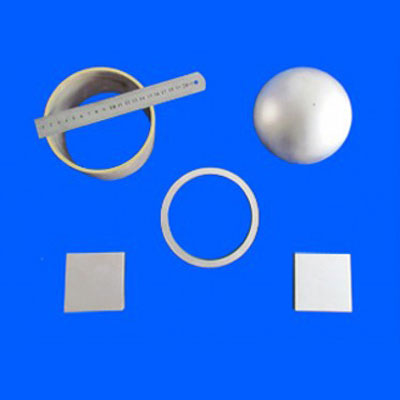
It usually starts with a familiar purchasing problem: two suppliers quote parts that look similar on paper, but the price gap is wider than expected. The drawing may only show dimensions, resonant frequency, capacitance, or a basic material grade, yet one quotation comes back noticeably higher. When the order volume increases, that gap becomes harder to ignore. At the same time, choosing only by unit cost can create a different problem later—unstable output, assembly mismatch, delayed delivery, or inconsistent performance across batches.
This is especially common when sourcing high power piezoelectric ceramic components for ultrasonic equipment, transducers, sensing assemblies, or other industrial systems where electrical behavior and mechanical fit have to stay tightly controlled. Many buying teams discover that the real cost is not hidden in one single line item. It is spread across raw materials, processing difficulty, tolerances, testing depth, yield, packaging, communication effort, and the supplier’s ability to repeat the same quality over time.
If you are trying to understand why one component costs more than another, it helps to stop treating piezo ceramics like a generic commodity. A lower quote may still be the right choice in some cases, but only after the cost drivers are compared against the actual demands of the application. Without that step, savings on purchase price can easily turn into extra spending during incoming inspection, assembly adjustment, maintenance, or replacement cycles.
Where cost confusion usually begins
A common mistake is to compare only the visible specifications. Buyers often receive a list that includes outer diameter, thickness, frequency, electrode type, and quantity, then assume the parts are directly comparable. In practice, those items describe only part of the component. They do not fully show polarization consistency, density control, material stability under high drive conditions, or how tightly the process is managed during sintering and machining.
That is why two offers can look almost identical while carrying different manufacturing realities behind them. One supplier may be quoting a process that is adequate for lower stress applications. Another may be building in tighter process control because the part is intended for powerful ultrasonic welding, washing, punching, fault detection, flow measurement, underwater acoustics, or related uses where output stability matters more. The quote reflects not just the part itself, but the risk level being absorbed by the manufacturer.
Material composition is one of the first major cost drivers
Piezoelectric ceramics are highly sensitive to formulation and process discipline. For high power use, the selected material has to balance electromechanical performance, heat behavior, aging characteristics, and resistance to depolarization under demanding operating conditions. This is not simply a matter of choosing “better” material in a vague sense. It is about choosing a composition suitable for the electrical and mechanical load the component will actually see.
Material consistency influences more than performance. It also affects production yield. If the ceramic body is prone to variation, more pieces may fail during firing, machining, polarization, or final testing. Higher scrap and rework inevitably push cost upward. For the buyer, the practical question is whether the application truly needs that level of material control. If it does, the higher price may be reasonable. If it does not, overspecification can waste budget.
When reviewing quotations, it is worth asking not only for the material designation, but also for its intended operating profile. A supplier focused on piezoelectric ceramics for ultrasonic and electrical functions will usually discuss the match between the ceramic material and the working conditions rather than relying only on a code or generic description.
Precision in forming and machining affects both price and assembly risk
Another cost driver shows up after the ceramic body is made: dimensional control. In high power assemblies, small deviations can affect preloading, bonding uniformity, resonance behavior, and mechanical coupling. If the component needs tighter flatness, parallelism, diameter tolerance, thickness tolerance, or special geometry, manufacturing time rises. Scrap risk may rise as well, especially for brittle ceramic parts that must be machined carefully.
This is one reason larger scale orders do not always reduce price as much as expected. Volume helps, but only within the limits of process capability. If the required tolerance window is narrow, each additional batch still needs careful control. On the purchasing side, this is where internal review can save money: confirm whether every tolerance on the drawing is functionally necessary. In many organizations, legacy drawings carry tighter limits than the application truly needs. Relaxing one or two unnecessary dimensions can improve supply options without harming end use.
Electrode choices and finishing details add up quietly
Electrode material, coating quality, edge treatment, lead attachment method, surface finish, and insulation handling may seem secondary compared with ceramic performance, but they often influence cost in a very direct way. Some assemblies need stronger adhesion, cleaner solderability, or better environmental resistance. Others only need a basic conductive layer for internal mounting.
In scaled procurement, these details matter because they affect labor both at the supplier and at your own production site. A cheaper ceramic element may still create extra cost if its electrode uniformity causes poor soldering, if lead attachment is inconsistent, or if finishing variation slows incoming inspection. The part cost and the assembly cost should be reviewed together rather than separately.
Testing depth is often the hidden line behind price differences
Many quote comparisons fail because buyers assume “tested” means the same thing across all suppliers. It rarely does. One source may check only a few standard electrical values. Another may perform broader screening for resonance characteristics, capacitance spread, mechanical integrity, or batch consistency. For high power applications, the difference between basic inspection and application-relevant validation can be significant.
More testing raises cost, but it can also reduce uncertainty. The key is not to demand the longest possible test list. The key is to ask for the tests that match the real failure modes of the product. If the component will be used in powerful ultrasonic equipment, it makes sense to focus on the parameters that influence output stability and durability under that type of drive. If the use is less demanding, a simpler acceptance approach may be enough.
This is often where experienced suppliers add value quietly. Instead of only asking for a drawing, they may ask about operating frequency, input power, mounting method, duty cycle, or environmental exposure. That conversation can prevent both under-specification and unnecessary testing cost.
Customization has a clear cost logic
Standard parts usually offer the easiest route to lower purchase cost. Once a part requires custom dimensions, tuned frequency behavior, special hole structures, unique metallization, matched sets, or integration into a transducer design, the price begins to reflect engineering effort and process setup. At scale, custom parts can still make sense, but only when the customization solves a real system problem.
Many teams run into trouble when they request custom designs too early. They try to optimize the ceramic before confirming whether the surrounding structure, adhesive, preload, driver circuit, or enclosure is the actual constraint. In those cases, the ceramic quote looks expensive because the component is being used to compensate for broader design uncertainty.
A more cost-effective path is to define which features are fixed and which are negotiable. If the application genuinely requires a custom piezo element or power transducer configuration, then the added cost is easier to justify. If not, standardizing around an existing form factor can shorten lead time and improve repeatability.
Yield and process stability matter more at scale than at prototype stage
A sample order can be misleading. A supplier may be able to produce a small quantity of acceptable parts without proving that the same quality can be maintained across larger batches. For scaled sourcing, process repeatability becomes part of the cost structure. The more stable the forming, firing, polarization, and inspection process, the lower the chance of variation between shipments.
This does not mean every higher-priced source is automatically more stable. It means the buyer should investigate whether the supplier’s manufacturing setup fits the volume and application seriousness of the order. Facilities, technical strength, and familiarity with piezo products used in ultrasonic welding, fault detection, flow meters, underwater sound, and similar functions often matter because these applications tend to expose inconsistency quickly.
From a purchasing standpoint, the practical issue is continuity. A cheaper source that struggles with batch uniformity can create partial deliveries, more sorting effort, and repeated technical clarification. Those indirect costs are easy to underestimate when looking only at the quotation table.
Lead time pressure can increase price even before production begins
Urgent schedules often distort cost evaluation. When delivery is compressed, suppliers may need to rearrange production, prioritize certain materials, increase inspection coordination, or accept lower scheduling efficiency. The part itself has not changed, but the delivery condition has. That is why rush orders frequently come with higher prices or tighter commercial terms.
For long-term sourcing, forecasting is one of the simplest cost controls. Even a rough demand outlook can help the manufacturer prepare raw materials and production windows more efficiently. That tends to reduce avoidable premium costs. It also improves the odds of getting parts with more consistent batch planning rather than piecemeal emergency production.
Packaging, transport, and handling are not trivial for brittle components
Ceramic elements can be damaged by impact, pressure concentration, moisture exposure, or poor stacking during transit. Protective packaging adds cost, but insufficient packaging can create hidden losses through breakage, microcracks, or disputed incoming quality issues. This is especially relevant for thin discs, rings, plates, and precision-machined parts used in high power assemblies.
When reviewing supply options, it helps to ask how the parts are packed, separated, labeled, and protected for shipment. Good packaging is not just a logistics detail. It is part of preserving yield after the parts leave the factory.
A better way to compare quotations
When cost pressure is high, the most useful comparison is not “Which supplier is cheapest?” but “What exactly am I paying for?” A practical review usually includes these points in conversation, even if they are not presented as a formal checklist: whether the material is suited to the operating load, whether tolerances reflect actual assembly needs, how much testing is included, what level of customization is being quoted, how stable the batch process is, and whether the delivery plan matches forecast reality.
If one supplier offers a low price but gives very little detail on testing, material fit, or process repeatability, the quote may still be usable for non-critical applications. If another supplier provides stronger support on ceramic material selection, transducer-related requirements, and consistency for industrial ultrasonic use, the higher quote may represent lower total procurement risk. The right choice depends on the consequence of failure, not on price alone.
When to involve technical review before placing the order
If the part will operate under high drive levels, elevated heat, repeated duty cycles, or in equipment where resonance behavior directly affects output, it is wise to involve engineering before finalizing the purchase. The same applies when switching suppliers, changing material grade, or scaling from pilot quantity to regular production.
At that stage, a manufacturer with experience in piezoelectric components, ceramic sensors, ultrasonic piezo products, and power transducers can be useful not because of marketing language, but because the discussion can narrow down which specifications truly control cost and which ones can be simplified. That kind of early clarification often prevents expensive back-and-forth later.
In the end, sourcing high power piezoelectric ceramic components at scale is less about finding the lowest number and more about finding the cost structure that matches the application. The unit price matters, of course. But in real purchasing work, the more important question is whether the quoted component can deliver repeatable performance, manageable assembly, and reliable supply without shifting hidden cost into another part of the process. Once that becomes the basis for comparison, pricing starts to make a lot more sense.

Thank you very much for writing to us. Please leave your message and contact information, we will reply to you within 24 hours.