

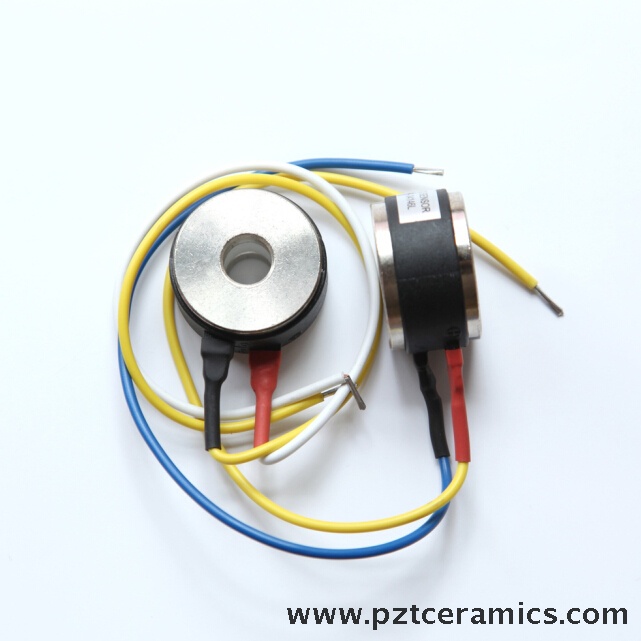
How PZT Piezoelectric Ceramics Affect Sensor Accuracy
For technical evaluators, sensor accuracy starts with material behavior under load, temperature, and time.
That is why pzt piezoelectric ceramics remain central in pressure, vibration, distance, and ultrasonic sensing.
Their electrical response is fast, measurable, and repeatable when the ceramic is properly designed and processed.
In practical terms, better material stability usually means cleaner signals and smaller measurement drift.
This also means calibration holds longer, especially in systems exposed to continuous cycling or changing environments.
Why PZT Is Widely Used in Precision Sensors
PZT stands for lead zirconate titanate, a ceramic known for strong piezoelectric activity.
When mechanical force is applied, the material generates charge.
When voltage is applied, it changes shape in a controlled way.
That dual behavior makes pzt piezoelectric ceramics useful in both sensing and actuation.
For sensor design, the main value is high sensitivity without sacrificing compact size.
It is one reason they appear in ultrasonic inspection, flow measurement, sonar, fault detection, and length measurement.
Compared with lower activity materials, PZT can produce stronger output from the same input condition.
That stronger output improves signal-to-noise ratio, which directly affects usable accuracy.
The Material Properties That Influence Accuracy
Not every piezo ceramic behaves the same way.
Sensor accuracy depends on several linked electrical and mechanical properties.
- Piezoelectric constant: higher values usually mean greater sensitivity to force or pressure changes.
- Dielectric constant: this affects charge storage, impedance behavior, and circuit matching.
- Mechanical quality factor: this influences resonance sharpness and dynamic response.
- Curie temperature: this shows how well the material keeps performance at elevated temperatures.
- Aging rate: lower aging helps preserve calibration and long-term consistency.
These values do not work in isolation.
A sensor may need high sensitivity, but not at the expense of stability or bandwidth.
That tradeoff is where careful grade selection becomes important.
How PZT Piezoelectric Ceramics Improve Signal Quality
Accuracy is not only about sensitivity.
It is also about how cleanly a sensor converts a physical event into an electrical signal.
PZT helps because its response is fast and well suited to high-frequency detection.
In ultrasonic systems, short response time supports better timing resolution.
That leads to more precise distance calculation and better flaw detection results.
In vibration sensing, the material can capture small amplitude changes that weaker ceramics may miss.
When the output signal is stronger, front-end electronics can work with less amplification.
Less amplification often means less added noise.
That is a practical route to better measurement confidence.
What Reduces Accuracy in Real Operating Conditions
Real accuracy rarely matches ideal lab conditions unless the material is matched to the application.
Several common issues can limit the performance of pzt piezoelectric ceramics in service.
- Temperature drift changes sensitivity and resonance behavior.
- Material aging slowly shifts electrical constants over time.
- Poor electrode bonding increases loss and weakens signal transfer.
- Inconsistent polarization creates unit-to-unit variation.
- Mechanical mounting stress alters the intended vibration mode.
From a selection standpoint, these factors matter as much as catalog values.
A high nominal constant is useful, but consistency across production lots often matters more.
That is where manufacturing control becomes part of the accuracy discussion.
Why Manufacturing Quality Matters
Even a strong PZT formulation can underperform if processing is unstable.
Density, grain structure, sintering control, and poling conditions all affect final behavior.
Small production differences can show up as frequency shift, sensitivity spread, or higher dielectric loss.
For technical evaluation, repeatability is usually a stronger signal than a single impressive test result.
Weifang Jude Electronic Co. Ltd focuses on high quality piezoelectric ceramics for multiple electrical functions.
Its products are used in high-frequency components, ultrasonic welding, washing, punching, flow meters, sonar, and fault detection.
That breadth matters because it reflects experience across demanding acoustic and measurement environments.
In related ultrasonic assemblies, Piezoelectric Transducer for Ultrasonic Cleaner shows how application-specific transducer design supports stable energy conversion.
Application-Specific Accuracy Considerations
Different sensing tasks place different demands on pzt piezoelectric ceramics.
The best material choice depends on the error source that matters most.
This is why material evaluation should stay tied to the target operating profile.
A ceramic that works well in a cleaner transducer may not be ideal for a precision pressure channel.
How to Evaluate PZT for Sensor Projects
A practical review process should move beyond datasheets.
The goal is to confirm whether pzt piezoelectric ceramics will stay accurate in actual use.
- Check sensitivity spread across multiple samples, not a single reference part.
- Test over the full operating temperature range.
- Review impedance and resonance data after assembly, not only before mounting.
- Measure drift after cycling, storage, and humidity exposure.
- Confirm supplier process consistency and traceability.
This approach helps separate theoretical performance from stable field performance.
It also reduces the risk of redesign after pilot validation.
In some ultrasonic systems, solutions such as Piezoelectric Transducer for Ultrasonic Cleaner are useful references for understanding material-to-assembly matching.
Final Takeaway
PZT is popular for a reason.
Pzt piezoelectric ceramics support strong sensitivity, fast response, and reliable signal generation in compact sensor designs.
But accuracy depends on more than the material name.
It depends on grade selection, production control, mounting method, and environmental fit.
The most useful evaluation question is simple.
Can this ceramic keep delivering repeatable signals under the exact conditions the sensor will face?
When the answer is backed by data, pzt piezoelectric ceramics become a strong foundation for accurate, durable sensing systems.

Thank you very much for writing to us. Please leave your message and contact information, we will reply to you within 24 hours.