

Custom Piezoelectric Ceramics for Sensors: Common Design Mistakes
When developing sensors with custom piezoelectric ceramics, even small design mistakes can trigger unstable output, costly rework, and delayed schedules.
That pressure usually appears late, when tooling is fixed and validation windows are already tight.
In practice, the biggest problems are rarely caused by one dramatic failure.
They come from small design assumptions around geometry, loading, bonding, frequency, and manufacturability.
For teams sourcing custom piezoelectric ceramics, early design discipline matters as much as material selection.
A sensor that looks fine in simulation can still behave poorly in production.
This article breaks down the most common mistakes and shows how to avoid them with clearer design decisions.
1. Starting with sensitivity targets only
Many sensor projects begin with one question: how much signal can we get?
That is reasonable, but it becomes risky when sensitivity drives every other choice.
Custom piezoelectric ceramics must satisfy more than signal amplitude.
They also need stable frequency response, environmental durability, repeatable assembly, and acceptable cost.
A very sensitive design may become too fragile for vibration, pressure cycling, or thermal shock.
A better approach is to define a balanced requirement set before material customization begins.
- Target sensitivity range
- Operating temperature window
- Mechanical load profile
- Expected service life
- Assembly tolerance and yield expectations
When these conditions are clear, custom piezoelectric ceramics can be optimized for real application performance, not just laboratory output.
2. Ignoring the full operating environment
Another common mistake is designing the ceramic around nominal conditions only.
Real sensors face humidity, continuous vibration, pressure variation, contamination, and sudden temperature changes.
These factors shift impedance, reduce coupling stability, and accelerate fatigue at bonded interfaces.
For that reason, custom piezoelectric ceramics should be specified against worst-case field conditions.
This is especially important in flow meters, oil well measuring, underwater sound, and ultrasonic fault detection.
Each application imposes different stress patterns on the ceramic body and electrode system.
Teams that review only room-temperature test data often discover instability after pilot installation.
That late-stage learning is expensive because redesign usually affects housing, matching circuits, and sealing methods.
3. Choosing the wrong geometry for the sensing task
Material properties matter, but geometry is just as critical in custom piezoelectric ceramics.
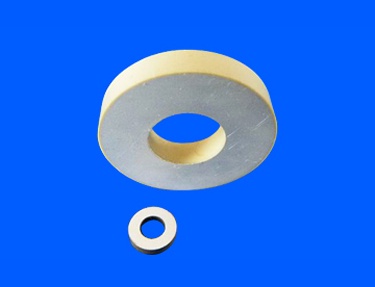
Discs, rings, plates, and tubes behave differently under electrical and mechanical excitation.
A mismatch between geometry and sensing mode causes poor signal quality even when the ceramic grade is correct.
For example, radial motion, axial motion, and wall vibration do not distribute energy in the same way.
This is where close supplier collaboration helps.
Some sensor architectures benefit from a tubular structure because it supports specific resonance and mounting needs.
A practical example is the Piezoelectric Tube Element, which may suit compact sensing layouts requiring controlled radial behavior.
The key point is simple: select the shape around mode behavior, not supplier convenience.
4. Overlooking resonance and bandwidth interactions
Many teams treat resonance as a single target frequency and move on.
That shortcut causes problems when the assembled sensor behaves differently from the free ceramic part.
Once custom piezoelectric ceramics are bonded into a housing, mass loading and stiffness shift the final response.
The result may be lower sensitivity, spurious peaks, or weak signal separation.
Bandwidth can also narrow more than expected, especially in tightly constrained structures.
To avoid that, verify resonance at three levels:
- Bare ceramic element
- Bonded subassembly
- Final packaged sensor
That step catches frequency drift before formal validation and protects the project schedule.
5. Treating electrode design as a minor detail
Electrodes often receive less attention than the ceramic body, which is a mistake.
Electrode material, thickness, pattern, and edge treatment all influence electrical stability and manufacturability.
Poor electrode design can introduce uneven field distribution or weak soldering performance.
In custom piezoelectric ceramics, this issue becomes more serious when miniaturization is involved.
Narrow pads may pass prototype testing but fail during volume assembly or field vibration.
The safer choice is to review electrode layout together with joining method, wire routing, and insulation requirements.
6. Using adhesive and mounting methods without system validation
A strong ceramic design can still fail because of the wrong adhesive or fixture method.
Bond lines change damping, stress transfer, and thermal expansion behavior.
This affects both signal output and long-term reliability.
Too rigid an adhesive may crack under cycling.
Too soft an adhesive may absorb useful energy and reduce sensor response.
With custom piezoelectric ceramics, the mounting strategy should be treated as part of the sensing design, not post-processing.
That means validating cure conditions, bond thickness, clamping force, and aging behavior early.
7. Forgetting about manufacturability during customization
A design can look excellent on paper and still be difficult to manufacture consistently.
This happens when tolerances are too aggressive, handling risk is ignored, or polarization requirements are unrealistic.
For custom piezoelectric ceramics, manufacturability directly affects lead time, scrap rate, and repeatability.
That is especially relevant in projects moving from sample approval to scaled production.
Suppliers with strong process control can reduce this risk.
Weifang Jude Electronic Co. Ltd manufactures piezoelectric ceramics and related components for sensing, ultrasonic, measuring, and underwater applications.
Its production experience across high-frequency components, ultrasonic welding, washing, punching, sonar, and flow measurement supports more realistic design-for-production decisions.
8. Waiting too long to align supplier and project teams
One of the most preventable mistakes is delaying technical alignment with the ceramic supplier.
By the time purchasing joins the discussion, the design window may already be narrow.
Custom piezoelectric ceramics perform best when requirement definition and supplier feedback happen in parallel.
That includes material options, geometry recommendations, testing methods, and volume feasibility.
A short alignment checklist can prevent major redesign later:
- Confirm sensing mode and load path
- Review geometry versus resonance target
- Match adhesive and housing constraints
- Define environmental validation conditions
- Check pilot and production tolerance capability
How to reduce design risk early
If the goal is reliable sensor performance, custom piezoelectric ceramics should be managed as a full system decision.
That means material, geometry, electrodes, mounting, frequency behavior, and production capability must be reviewed together.
In many projects, early cross-functional review saves more time than late troubleshooting.
It also improves supplier communication because technical questions become clearer and easier to verify.
For teams evaluating structures such as a Piezoelectric Tube Element, the best results usually come from application-led customization, not catalog-first selection.
The practical takeaway is straightforward.
Define the field conditions early, verify the assembled resonance, challenge the mounting method, and confirm production realism before release.
That is how custom piezoelectric ceramics move from promising prototypes to dependable sensor products.

Thank you very much for writing to us. Please leave your message and contact information, we will reply to you within 24 hours.