

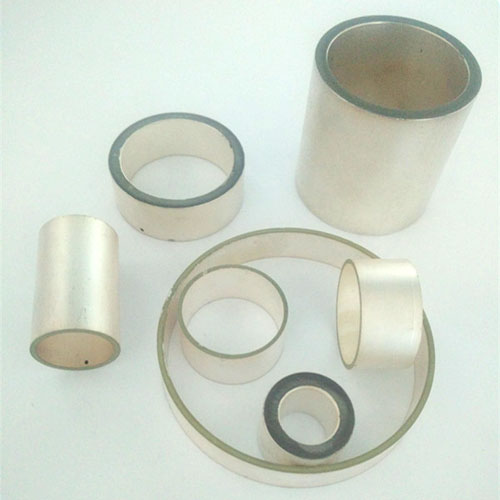
Price is rarely the deciding factor when custom piezoelectric ceramics are evaluated for real production use. Material behavior, resonance stability, machining precision, and application fit usually matter far more. In ultrasonic welding, sensing, flow measurement, or underwater acoustics, a small mismatch in specifications can reduce output, distort signals, or shorten service life. That is why custom piezoelectric ceramics should be reviewed as engineered functional parts, not as interchangeable commodities.
What custom piezoelectric ceramics really involve
Custom piezoelectric ceramics are ceramic elements designed around a target electrical and mechanical response. They convert electrical energy into motion, pressure, or sound, and can also work in reverse.
That definition sounds simple, but specification work is rarely simple. Geometry, electrode pattern, polarization direction, density, and firing quality all influence final performance.
In practice, custom piezoelectric ceramics are selected for a task, not just for a material name. A disc for fault detection has different priorities from a ring used in power ultrasonics.
This is where experienced suppliers matter. Weifang Jude Electronic Co. Ltd supports applications ranging from high frequency components to ultrasonic welding, washing, punching, flow meters, oil well measurement, and sonar-related uses.
That range is important because it reflects process knowledge. Broad application exposure often leads to better guidance on material choice, structural design, and consistency control.
The specifications that deserve close attention
When sourcing custom piezoelectric ceramics, the key question is not only whether a sample works. The better question is whether it works repeatedly under the actual operating conditions.
Material composition and grade
Different piezo ceramic formulations deliver different sensitivities, coupling factors, dielectric constants, and loss behavior. Hard materials are often preferred for high power use.
Soft materials can offer stronger sensitivity and easier drive response, but they may not hold up as well under heavy electrical or mechanical stress.
Resonance and impedance behavior
Resonance frequency is central to ultrasonic and sensing performance. A part may look correct dimensionally but still fail system targets if impedance peaks shift too far.
Evaluators usually review resonant frequency, anti-resonant frequency, impedance at resonance, and electromechanical coupling. These values show how efficiently the ceramic interacts with the drive circuit.
Dimensional tolerances
Thickness variation can change resonance behavior. Diameter errors can affect assembly stress. Flatness and concentricity become more critical in stacked or bonded structures.
For custom piezoelectric ceramics, tolerance control should match the application risk. Tight tolerances increase cost, but loose tolerances can create hidden system instability.
Operating frequency and drive conditions
A ceramic that performs well at one frequency band may behave very differently at another. Drive voltage, duty cycle, preload, and bonding method also change the effective response.
This is why test data should reflect actual working conditions instead of ideal bench measurements alone.
Why application context changes the specification priority
The same custom piezoelectric ceramics strategy does not apply across every use case. What matters most depends on how energy is transmitted, measured, or received.
High-power ultrasonic systems
In welding, washing, and punching equipment, power density and thermal endurance are usually major concerns. Mechanical loss and long-term resonance stability deserve careful review.
A part that delivers strong initial output but drifts under load may create maintenance problems or unstable process quality.
Sensors and measurement devices
For flow meters, length measuring systems, and fault detection, signal clarity often matters more than raw power. Dielectric behavior, noise response, and frequency consistency become more valuable.
Small deviations can affect calibration, repeatability, and measurement confidence over time.
Underwater sound and sonar-related use
Acoustic coupling, sealing compatibility, and pressure tolerance may outweigh other factors. Reliability in demanding environments becomes part of the specification, not an afterthought.
A practical reference point can be seen in products such as ultrasonic acoustic transducer A-80K, where frequency behavior and application structure need to align from the start.
Manufacturing quality is not separate from performance
With custom piezoelectric ceramics, performance data and manufacturing capability should be reviewed together. A strong design loses value if batch uniformity cannot be maintained.
Sintering control, electrode application, polarization process, and final inspection all affect usable output. Even minor process variation can shift electrical characteristics.
This is one reason established production resources matter. Companies with dedicated facilities and stable process control can usually support better consistency across repeated orders.
For technical evaluation, it helps to ask how performance is verified at the factory level. Material certificates alone do not explain lot-to-lot behavior.
- Check whether resonance and impedance are tested for each batch.
- Confirm dimensional inspection methods, not just nominal tolerances.
- Review electrode quality and bonding surface condition.
- Ask for reliability data under realistic voltage and temperature conditions.
Questions worth settling before an order is placed
A useful evaluation process brings the application into the quotation stage early. That reduces the chance of getting a technically correct part that performs poorly in the full assembly.
Define the real operating window
Specify the target frequency, voltage range, duty cycle, mounting structure, and environmental exposure. These details shape the right custom piezoelectric ceramics choice.
Separate must-have values from preferred values
Some specifications are critical limits. Others are optimization targets. Mixing them together often slows development and creates unnecessary cost pressure.
Request data that supports decisions
Look for impedance curves, resonance data, tolerance ranges, and sample test conditions. A single nominal value is rarely enough for comparison.
Think beyond the sample stage
A successful prototype does not guarantee a stable production lot. Batch consistency, lead time, and repeat process capability should be considered early.
That same discipline applies when comparing custom piezoelectric ceramics with assembled transducer options, including solutions related to ultrasonic acoustic transducer A-80K.
A practical way to move forward
The strongest sourcing decisions usually begin with a clear application map. Define what the ceramic must do, what it must survive, and which values cannot drift.
From there, compare suppliers on technical evidence, process stability, and application understanding. For custom piezoelectric ceramics, those factors usually predict long-term results better than price alone.
A short specification checklist, supported by real test data and realistic assembly conditions, gives a far better basis for judgment. It also makes later verification faster and more reliable.

Thank you very much for writing to us. Please leave your message and contact information, we will reply to you within 24 hours.