

When does a resonance mismatch show up in daily operation?
Most operators notice it before they can name it. The machine starts feeling weaker, the vibration becomes uneven, the sound changes, or the temperature rises faster than usual. With ultrasonic piezoelectric ceramics, resonance is where electrical drive and mechanical vibration work together efficiently. Once that match drifts, output quality usually drops quickly.
In practical terms, a mismatch often looks like reduced amplitude, unstable power draw, slower process response, extra heat at the transducer area, or a harsh sound that was not there before. In welding, that may mean inconsistent joints. In cleaning or washing equipment, it can mean weaker cavitation or patchy results. In testing or sensing applications, it can show up as noisy or unreliable signals.
A useful rule on the shop floor is simple: if the system needs more input to achieve the same result, or if the same settings now produce a different mechanical response, resonance should be one of the first things you suspect.
What are the clearest warning signs that the ceramics are out of resonance?
Not every symptom appears at once. Sometimes the only early clue is a small change in sound or heat. More obvious cases bring several signs together.
- The system runs hotter than normal, especially around the transducer stack.
- Vibration strength feels weak or inconsistent under a familiar load.
- Current or power behavior becomes unstable, even though the process setup has not changed much.
- Abnormal noise appears, often sharper, rougher, or more irregular than the normal ultrasonic operating sound.
- The machine reaches target performance more slowly, or cannot hold it steadily.
- Parts downstream begin showing quality variation that was not present before.
One symptom on its own does not prove the ceramics are at fault. A loose mechanical assembly, a changed load, cable issues, or a drifting generator can create a similar picture. What matters is the pattern: weaker output plus extra heat plus unstable sound is a strong warning combination.
Can abnormal noise really point to a resonance problem?
Yes, and operators often catch this earlier than instruments do. A healthy ultrasonic assembly tends to sound consistent from cycle to cycle, even if part of the frequency is above hearing range. When the piezo stack is not working at the right resonance point, the system can produce side noises, uneven buzzing, rattling, or a strained tone.
The reason is straightforward. When the drive frequency and the mechanical resonance no longer line up well, some input energy stops turning into useful vibration and starts showing up elsewhere, including unwanted mechanical motion and heat. If the sound changed suddenly after maintenance, part replacement, tightening, or a process change, look at the stack condition and the matching of the full ultrasonic assembly, not just the ceramic itself.
Why does temperature rise so fast when resonance is off?
Because energy is being wasted. At proper resonance, ultrasonic piezoelectric ceramics convert electrical energy into mechanical vibration efficiently. When the match drifts, more of that energy turns into internal loss and friction-like heating inside the system. That heat may build in the ceramic, the bonding layers, nearby metal parts, or the overall transducer assembly.
Operators should pay attention to two details. First, compare temperature rise against the same duty cycle and load, not against a different process condition. Second, watch whether the heat appears gradually over long use or spikes quickly after startup. A fast rise often points to a serious efficiency problem or an assembly issue that should not be ignored.
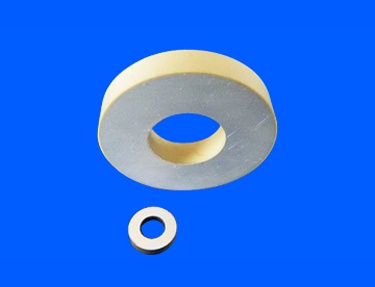
If you are working with large or custom-shaped parts, the interaction between geometry and resonance becomes even more important. In those cases, it helps to review the intended part type and assembly fit, especially when sourcing components such as Piezoelectric ceramic large-shaped product pzt manufacturer options for systems where the mechanical structure strongly affects the operating point.
What usually causes the mismatch: the ceramic, the driver, or the assembly?
Any of the three can be responsible, and in real equipment the cause is often a combination rather than a single fault. That is why random part swapping wastes time.
The important point is that resonance belongs to the full working system. A ceramic that performs well in one assembly may behave differently in another if the mechanical mass, clamping, or load changes.
What should an operator check first before stopping the whole line?
Start with the checks that are fast, visible, and least invasive. The goal is to separate a process upset from a real resonance problem.
- Compare current behavior with the last known stable setup: output, cycle effect, sound, and heat.
- Check whether the load changed: workpiece, liquid condition, contact pressure, fixture, or mounting position.
- Inspect connectors, cables, and visible fasteners for looseness or damage.
- Review any recent maintenance or part replacement on the transducer, horn, fixture, or power unit.
- If the equipment has tuning or tracking information, compare it with its normal operating pattern.
If the issue appears only after a tooling or assembly change, do not assume the ceramic has failed. In many cases, the stack is still functional but no longer matched well to the altered mechanical condition.
Is it safe to keep running when the mismatch seems minor?
Usually not for long. A small mismatch may still let the machine operate, but it often pushes heat upward and efficiency downward. That can shorten component life, distort process consistency, and create secondary damage in surrounding parts. What looks like a minor output drop at the beginning can turn into a cracked ceramic, degraded bonding, or mechanical loosening if the system is forced to compensate with more power.
A better operating decision is to reduce load if possible, compare against a known good condition, and investigate before increasing power to “push through.” Raising power without understanding the mismatch is one of the most common operator mistakes.
Can the process load itself pull the system away from resonance?
Absolutely. This is common in real applications and often overlooked. Ultrasonic piezoelectric ceramics do not operate in isolation. The working load changes the mechanical behavior of the full vibrating structure. Contact pressure in welding, liquid depth in cleaning, material hardness, fixture rigidity, and even contamination on contact surfaces can shift the operating point enough to affect resonance.
That is why a system may pass a no-load check but behave badly in production. If mismatch appears only during actual work, compare the real process conditions, not just the electrical settings. Operators who only monitor the generator screen can miss the true cause.
What mistakes make diagnosis harder than it needs to be?
Three habits cause the most confusion. One is changing several variables at once, such as power, pressure, tooling, and assembly torque. Another is judging the ceramic only by whether the machine still runs. The third is replacing the piezo part first without checking whether the surrounding stack or load changed.
When replacement is necessary, match the part to the real assembly need. For applications involving larger or specialized structures, sourcing should consider shape and integration requirements rather than treating every ceramic as interchangeable. That is where a product reference such as Piezoelectric ceramic large-shaped product pzt manufacturer becomes relevant in the selection stage, especially when geometry influences the vibration system.
What is the most practical way to prevent recurring resonance mismatch?
Build a baseline while the machine is healthy. Record the normal sound, temperature trend, process result, and whatever electrical indicators your equipment provides during stable operation. Then, when performance drifts, you have something real to compare against instead of relying on memory.
Also keep the mechanical side disciplined. Clean mating surfaces, consistent assembly force, secure connections, and controlled process load matter just as much as the ceramic itself. Many resonance problems that appear to be material failure are actually assembly drift or operating-condition drift.
If you remember one operating principle, make it this: when output weakens, sound changes, and heat rises together, do not chase only the electrical setting. Check the full ultrasonic path from power source to ceramic to mechanical load. That is where the real mismatch usually reveals itself.

Thank you very much for writing to us. Please leave your message and contact information, we will reply to you within 24 hours.