

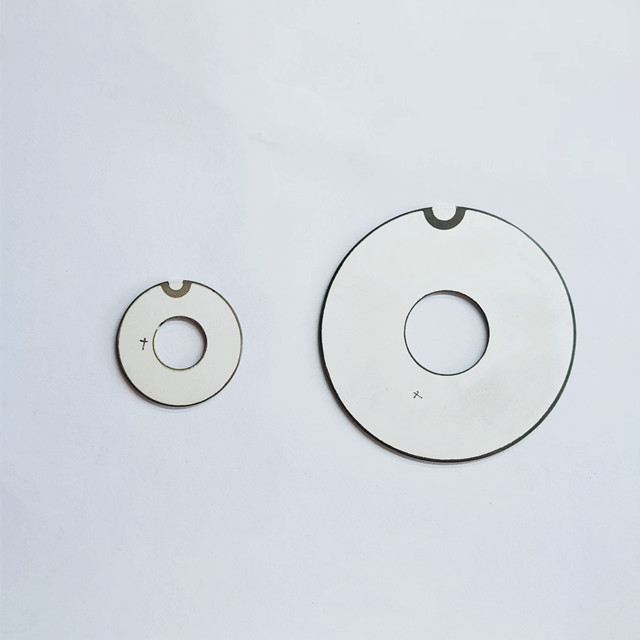
Total Cost Factors When Sourcing Piezoelectric Ceramic Components at Scale
At volume, the quoted price of a piezoelectric ceramic part is rarely the number that determines whether a sourcing decision was good. A low piece price can be wiped out by unstable resonance behavior, excessive rejection during incoming inspection, a tooling revision after the first production run, or a shipment that reaches the assembly line without the agreed electrode configuration.
This is especially true for Piezoelectric Ceramic Components used in ultrasonic welding, cleaning, sensing, fault detection, flow measurement, underwater acoustics, and high-frequency assemblies. In these applications, ceramics are not passive mechanical items. Their material behavior, dimensions, metallization, polarization, and consistency all influence the final device. Procurement teams therefore need to evaluate total acquisition cost rather than comparing quotations line by line.
The practical question is not simply, “Which supplier offers the lowest price?” It is, “Which supply option delivers parts that can be assembled, tested, and used reliably at the expected volume with the least commercial and technical disruption?”
Material Grade Is a Performance and Cost Decision
Piezoelectric ceramics are commonly selected for different priorities: sensitivity, drive capability, mechanical robustness, dielectric behavior, temperature stability, or a balance of these characteristics. A material suitable for a low-power sensing element may not be appropriate for a high-power ultrasonic transducer operating under sustained electrical and mechanical load.
That distinction matters during quotation. Two suppliers may both describe an item as a “piezo ceramic ring” or “ultrasonic piezo disc,” yet use different formulations, density controls, firing profiles, or polarization processes. The pieces may look nearly identical and still behave differently once installed. For buyers, the risk is not only a mismatch in nominal specifications. It is the cost of discovering the mismatch after transducer assembly, potting, bonding, or system-level validation.
The drawing should therefore be supported by a functional requirement whenever possible. Depending on the application, this may include resonant frequency range, capacitance, impedance behavior, coupling performance, dielectric loss, dimensional tolerances, electrode coverage, or operating environment. Not every project needs every parameter, but the critical few should be agreed before a purchase order becomes a production commitment.
There is also a common purchasing trap: specifying a premium material grade for a component that does not need it. If the application is a simple indication device or a moderate-duty sensor, paying for high-power characteristics may add cost without improving the finished product. The reverse error is more expensive. Selecting a lower-cost ceramic for a high-drive ultrasonic cleaning, welding, punching, or sonar-related assembly can create premature performance drift or inconsistent output that is difficult to trace back to the ceramic lot.
Shape Complexity Changes More Than Tooling Cost
Basic discs, rings, plates, and tubes are generally easier to manufacture repeatedly than parts with stepped profiles, thin walls, non-standard holes, slots, chamfers, curved surfaces, or tight concentricity requirements. Procurement teams often see the tooling line as a one-time expense and focus on amortizing it across forecast volume. That is necessary, but incomplete.
Complex geometry can affect yield at several stages: pressing or forming, sintering, machining, electrode application, polarization, and final inspection. A feature that seems minor on a mechanical drawing may increase breakage risk or require extra machining operations. Tight tolerances on a brittle ceramic are not comparable to the same tolerances on a machined metal part.
Before releasing a custom design, it is worth asking the supplier which dimensions are controlled by the forming tool, which are achieved after sintering, and which require grinding or machining. This conversation often identifies avoidable cost. Sometimes a small adjustment to a corner radius, hole size, thickness tolerance, or electrode boundary can substantially improve manufacturability without changing system performance.
Questions that expose hidden geometry costs
- Is a dedicated mold required, and who owns it after payment?
- Is the quoted tooling intended for prototypes, pilot production, or long-term volume manufacture?
- Which dimensions are most sensitive to sintering variation?
- Will grinding, lapping, drilling, or edge finishing be needed after firing?
- What happens commercially if a drawing revision requires new tooling?
A supplier should not be expected to disclose proprietary process details, but it should be able to explain the manufacturing implications of the requested geometry. That level of discussion is usually more useful than a simple assurance that “custom sizes are available.”
Testing and Sorting Can Be Cheaper Than a Broad Specification
Electrical and acoustic consistency often matters more than visual consistency. In a multi-element ultrasonic assembly, for example, variation in frequency or impedance can affect matching and output. In a sensor, the relevant concern may be response stability rather than peak power handling. Buyers should determine whether parts are supplied as standard production output, tested to defined limits, or additionally sorted into narrow performance bands.
More inspection usually adds cost, but it can remove cost elsewhere. If an assembly process depends on matching ceramic elements, supplier-side frequency sorting may be less expensive than handling mixed populations at the customer’s factory. On the other hand, demanding tight sorting where the final application tolerates normal variation is an easy way to inflate price and lengthen lead time.
The test method deserves particular attention. A resonant-frequency result is only meaningful when the vibration mode, sample condition, fixture, and measurement approach are understood. Comparing a supplier’s test sheet with a customer’s internal result without aligning the method can lead to unnecessary disagreement. It is better to resolve this during sampling than after a container-sized order has been shipped.
Capacity Is Not the Same as a Large Factory Claim
At scale, supply continuity depends on more than equipment count. The relevant question is whether the supplier has stable access to the material, process capability for the particular part family, enough production flexibility for forecast changes, and a realistic plan for quality control as order quantities increase.
A manufacturer experienced with both piezoelectric components and power transducers may be better positioned to discuss application-related trade-offs than a distributor quoting from a catalog alone. For example, companies working across high-frequency components, ultrasonic welding and cleaning equipment, sensitive ultrasonic detection, dimensional measurement, flow measurement, and underwater sound applications tend to encounter different failure modes and assembly requirements. That does not remove the need for qualification, but it can improve the quality of the technical discussion before tooling is committed.
Weifang Jude Electronic Co. Ltd, for instance, manufactures and supplies piezoelectric ceramics, sensors, ultrasonic piezo products, and power transducer-related components for a range of electrical and ultrasonic functions. When evaluating suppliers with this type of manufacturing scope, buyers should look beyond the product list. Ask whether the supplier can support a controlled sample-to-production transition, maintain agreed specifications across repeat orders, and communicate promptly when a process change could affect performance.
A useful approach is to request a capacity discussion tied to the actual part number: expected monthly demand, planned ramp-up, minimum economical batch size, normal production cycle, and contingency options for urgent replenishment. Generic statements about annual capacity do not answer those questions.
Packaging, Freight, and Breakage Need Their Own Cost Line
Ceramic components can be compact but fragile. Freight cost per kilogram may look attractive while the true delivered cost becomes unfavorable because the shipment needs protective trays, partitioning, moisture protection, or robust outer cartons. Small, thin, or tightly tolerance-controlled pieces may need packaging that prevents edge damage and part-to-part contact.
Buyers should specify packaging expectations early, particularly where production lines rely on automated feeding, traceable lot segregation, or clean electrode surfaces. Bulk-packed components may be adequate for one assembly operation and unacceptable for another. Repacking at the destination adds labor, creates handling damage, and can compromise lot traceability.
Incoterms, customs clearance responsibilities, insurance, and lead-time variability should be assessed alongside the unit quote. Air freight may be justified for qualification samples or an unplanned shortage, but it is rarely a sound substitute for inventory planning. For recurring demand, many procurement teams find it more practical to establish a rolling forecast and agreed release schedule than to repeatedly place urgent spot orders.
The Most Expensive Failure Is an Uncontrolled Change
Once a part has been qualified, consistency becomes part of its value. Changes in ceramic formulation, electrode process, tooling, firing conditions, dimensions, or polarization practice may affect the final product even if the component still appears similar. Buyers do not need to dictate every production detail, but they do need a clear process for notification and review of changes that may alter agreed performance.
This is particularly important in field-sensitive applications such as ultrasonic fault detection, measurement systems, oil-well tools, flow meters, and sonar-related equipment, where replacement and investigation costs may exceed the original component price by a wide margin. The appropriate level of control depends on the application’s consequence of failure, but it should be decided deliberately rather than added after a quality issue.
A sound supply agreement normally defines the approved drawing revision, key electrical and mechanical checks, packaging requirements, lot identification, documentation expectations, and a route for handling nonconforming material. It should also state whether reference samples or golden units are retained. These details may feel administrative during early sourcing; they become very practical when a shipment needs to be accepted quickly or a performance concern must be investigated.
Build the Comparison Around Landed, Usable Parts
The cleanest way to compare quotations for Piezoelectric Ceramic Components is to calculate the expected cost of usable, accepted parts at the point of assembly. That calculation should include unit price, tooling allocation, testing or sorting charges, packaging, freight, duties where applicable, incoming inspection effort, expected yield loss, inventory exposure, and the cost of technical support during qualification.
Not every cost can be reduced. Some are simply the price of a component that performs consistently in a demanding design. The goal is to separate justified cost from avoidable cost. A supplier that asks detailed questions about operating conditions, dimensions, electrodes, testing, and volume planning may not produce the lowest first quotation. It may, however, be helping prevent the far more expensive outcome: purchasing a ceramic part that is cheap in the box but costly everywhere else.

Thank you very much for writing to us. Please leave your message and contact information, we will reply to you within 24 hours.