

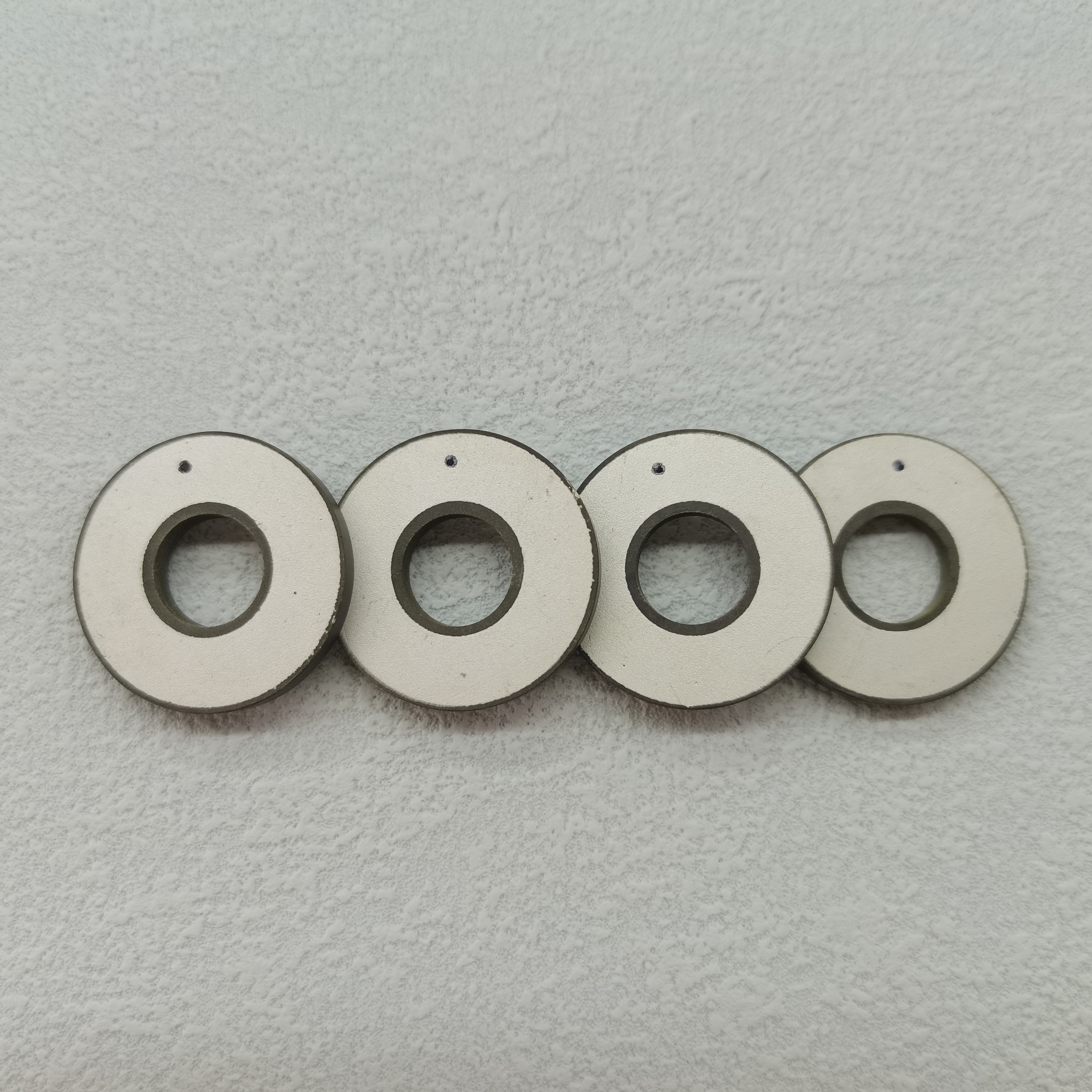
The 2026 piezoelectric ceramics market is no longer shaped only by price and lead time. Supply resilience, process consistency, and application-specific engineering are now influencing how a piezoelectric ceramics supplier is evaluated across industrial programs.
That shift matters because piezoelectric components sit inside systems where small material variation can affect sensing accuracy, ultrasonic output, energy conversion, and long-term reliability. In practice, supplier capability has become part of product performance.
For organizations planning sourcing in 2026, the market story is less about dramatic disruption and more about sharper selection standards. Buyers increasingly compare technical depth, production discipline, and application support before committing to volume supply.
Why supplier shifts are getting more attention
Piezoelectric ceramics are used in sensors, transducers, actuators, ultrasonic equipment, measuring instruments, and underwater acoustic systems. These are not generic end uses, so the supplier base is under pressure to respond with narrower tolerances and better process control.
A capable piezoelectric ceramics supplier now needs to do more than ship standard parts. Material formulation, polarization quality, electrode stability, and dimensional consistency all affect whether a component performs well in the final assembly.
Another reason for the shift is the expansion of ultrasonic and precision measurement applications. As systems become more specialized, the cost of using a weak supplier rises through redesign, scrap, downtime, and delayed qualification.
What the market is really rewarding in 2026
The market is favoring suppliers that can connect manufacturing strength with engineering responsiveness. That includes steady raw material handling, repeatable sintering, dependable testing, and the ability to align products with end-use demands.
In many sourcing reviews, the strongest candidates are not simply the lowest-cost producers. They are the companies that can document quality consistency and explain how their piezoelectric ceramics behave in real operating conditions.
This is where established manufacturers stand out. Weifang Jude Electronic Co. Ltd, for example, operates as both manufacturer and supplier of piezoelectric ceramics used across multiple electrical and ultrasonic functions.
Its product scope includes piezoelectric components, piezoelectric ceramic sensors, ultrasonic piezo products, and power transducers. The relevance is practical: broad application experience often improves communication, validation speed, and fit for demanding industrial use.
Signals buyers are watching more closely
- Whether batch-to-batch electrical properties remain stable during scale production.
- How quickly the supplier can translate application requirements into workable specifications.
- If testing data is credible enough for qualification and internal approval.
- How well the supplier supports long-cycle products needing continuity over several years.
- Whether manufacturing capacity matches urgent and scheduled orders without quality drift.
Core applications are influencing procurement standards
Application demand is reshaping what counts as a reliable piezoelectric ceramics supplier. In high-frequency components, small inconsistency can alter resonance behavior. In ultrasonic welding, power output and thermal durability become more important than a simple unit quote.
The same applies to washing, punching, and ultrasonic fault detection systems. These fields often require ceramics that hold performance under repeated cycles, vibration, and changing environmental conditions.
Measuring applications create another layer of demand. Length measuring, flow meters, oil well measurement, underwater sound, and sonar all rely on signal quality, sensitivity, and structural reliability.
A supplier with direct exposure to these use cases can usually discuss failure modes, packaging concerns, and frequency behavior with more precision. That becomes useful during vendor screening and later during production troubleshooting.
How to judge a piezoelectric ceramics supplier beyond quotations
A quotation still matters, but in 2026 it is only one part of the decision. The stronger approach is to compare the supplier’s technical behavior before comparing only landed cost.
Start with manufacturability. Good suppliers can explain how ceramic composition, shaping, firing, machining, and polarization influence final performance. That level of detail usually indicates whether production claims are grounded in actual control.
Then look at operating history. Weifang Jude Electronic Co. Ltd has built a reputation around quality, reliability, and product coherence, supported by manufacturing facilities and technical strength rather than catalog breadth alone.
That matters because many projects do not need a broad trading source. They need a piezoelectric ceramics supplier that can maintain consistency across repeated orders and support industrial use over time.
Useful evaluation points during supplier review
- Ask for data tied to your operating frequency, load, and environment.
- Review whether sample performance matches later production lots.
- Confirm which applications the supplier has supported successfully.
- Check response quality when discussing tolerances and failure analysis.
- Assess whether the supplier can support both standard and custom requirements.
Product diversity matters when demand becomes more segmented
One visible supplier shift is the move away from one-size-fits-all sourcing. End uses are becoming more segmented, so many buyers prefer suppliers able to cover multiple piezo formats without losing technical focus.
That does not always mean the largest catalog wins. It means a supplier can move between industrial transducers, ceramic sensors, ultrasonic elements, and niche components while keeping process discipline intact.
In some cases, smaller application products also signal useful manufacturing flexibility. A product such as Piezoelectric Ceramic Beauty Element may sit outside heavy industrial equipment, yet it still reflects precision in ceramic processing and stable functional output.
That kind of range can be relevant when evaluating whether a piezoelectric ceramics supplier has practical control over different shapes, frequencies, and operating expectations rather than only a narrow standard line.
What these shifts mean for sourcing strategy
The 2026 market suggests a clear sourcing direction. Organizations are better served by building a supplier framework around technical fit, continuity, and verification speed, then using price as a balancing factor.
This is especially important where piezoelectric ceramics affect critical sensing, ultrasonic energy transfer, or measurement precision. Requalification costs and field issues can quickly outweigh small savings at the purchase stage.
A reliable piezoelectric ceramics supplier should be able to support current volume needs while remaining flexible enough for design updates, qualification changes, and future application expansion.
That is why experienced producers continue to attract attention. Suppliers with proven use across high-frequency components, ultrasonic systems, flow meters, fault detection, and underwater sound are often easier to integrate into long-term planning.
Practical next steps
Map your demand by application, performance requirement, and lifecycle risk. Then compare suppliers using the same technical criteria across sample review, data quality, manufacturing depth, and communication quality.
Where programs involve ultrasonic, sensing, or precision measurement functions, it is worth examining suppliers with demonstrated production capability and application breadth. That is often where the real difference in sourcing outcomes begins.
In a market where reliability carries more weight than generic availability, choosing the right piezoelectric ceramics supplier becomes less about finding a vendor and more about selecting a stable technical partner for the next production cycle.

Thank you very much for writing to us. Please leave your message and contact information, we will reply to you within 24 hours.