

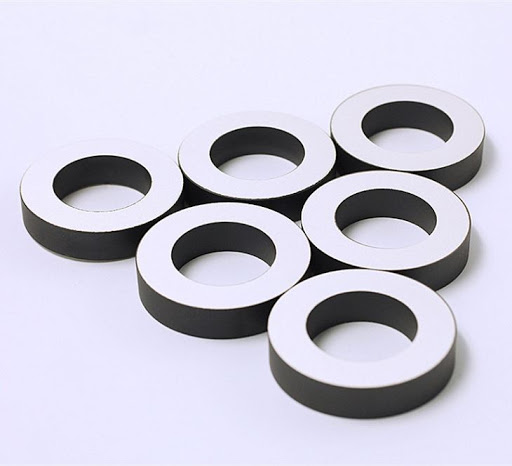
Using Piezoelectric Composite Materials to Improve Structural Health Monitoring Coverage
For a project manager, structural health monitoring is rarely a question of whether a structure should be inspected. The real question is whether the monitoring system can see enough of the structure, often enough, and clearly enough to support a confident decision.
A few sensors placed at obvious high-stress locations may confirm that equipment is still operating, but they can leave long weld lines, curved surfaces, inaccessible joints, and transition zones outside the effective sensing area. In industrial assets, that gap can become expensive. Damage may begin as a small crack, local delamination, corrosion-related thinning, or loose bond—conditions that are difficult to detect before they affect reliability, scheduling, or safety.
Piezoelectric Composites Materials provide a practical route to broader and more adaptable structural health monitoring coverage. By combining piezoelectric ceramic functionality with polymer-based composite structures, these materials can be engineered for better conformity, directional sensitivity, and integration into complex monitoring layouts. They are particularly valuable when conventional rigid piezoelectric elements cannot easily follow the shape or operational demands of the asset being monitored.
The goal is not simply to install more sensors. It is to create a sensing network that delivers meaningful information across the zones where failures are most likely to form, propagate, or remain hidden.
Coverage Is More Than Sensor Quantity
Many monitoring plans begin with a simple calculation: identify critical points, place sensors there, and collect data. That approach can work for stable, well-understood components. It becomes less reliable when the structure is large, geometrically complex, exposed to changing loads, or difficult to access once it enters service.
Coverage has at least four dimensions:
- Geometric coverage: whether sensing elements can be placed across flat panels, bends, shells, pipes, corners, bonded joints, and other irregular surfaces.
- Signal coverage: whether the generated or received wave energy reaches the inspection region with sufficient strength and useful frequency content.
- Operational coverage: whether the monitoring system remains usable through vibration, temperature changes, moisture exposure, cyclic loading, or limited maintenance access.
- Decision coverage: whether collected signals can be interpreted in time to guide inspection, maintenance, or continued operation decisions.
A monitoring design that performs well in only one of these areas can still leave a project team with blind spots. For example, a highly sensitive sensor may offer little value if it cannot be bonded reliably to a curved surface. A wide sensing network may also disappoint if baseline signals are inconsistent or if the selected frequency does not suit the thickness and material of the structure.
This is where piezoelectric composite transducers change the planning conversation. Their design flexibility allows engineers to treat coverage as a system-level requirement rather than an afterthought.
Why Composite Piezoelectric Structures Fit Complex Assets
Traditional piezoelectric ceramics such as PZT are widely used because they convert mechanical strain into electrical signals and electrical excitation into mechanical vibration with strong efficiency. They remain essential in ultrasonic testing, fault detection, flow measurement, underwater acoustics, and many other applications. Yet monolithic ceramic elements are inherently brittle and may be difficult to integrate where flexibility, shape conformity, or tailored vibration behavior is needed.
Piezoelectric composites retain the active ceramic phase while introducing a polymer phase or composite arrangement. Depending on the connectivity pattern, fiber orientation, electrode design, and backing materials, the resulting transducer can be optimized for a specific sensing role. A composite may be designed to favor thickness-mode response, directional wave generation, broad bandwidth, or improved matching with the host structure.
For structural health monitoring, this matters because the monitored structure is part of the measurement chain. Steel, aluminum, concrete, composite laminates, and bonded assemblies all transmit guided waves differently. A sensor that is well suited to one material thickness or geometry may be poorly matched to another. Piezoelectric composite materials give the design team more room to align transducer behavior with the asset rather than forcing the asset into a standard sensor configuration.
Where Broader Monitoring Coverage Makes a Difference
The strongest case for piezoelectric composite sensing usually appears in areas that are expensive to inspect manually or difficult to monitor with a single conventional technique.
On long pipelines and pressure-containing systems, guided-wave monitoring can help assess sections beyond the immediate sensor location. Composite transducers may be arranged around curved pipe surfaces or incorporated into collar-style assemblies to improve coupling and directional control. The project team still needs to account for supports, coatings, welds, bends, and changes in wall thickness, but a carefully selected transducer layout can reduce the need for repeated point-by-point inspection.
In welded metal structures, concern often concentrates around heat-affected zones, stiffener connections, fatigue-prone intersections, and areas exposed to cyclic stress. A network of actuator-sensor pairs can send and receive ultrasonic signals across these zones. Changes in signal arrival time, amplitude, phase, or wave mode may indicate that the structural condition has changed and deserves targeted follow-up.
Composite structures introduce a different challenge. Delamination, impact damage, porosity, and adhesive bond degradation may not be visible from the surface. Because piezoelectric composite sensors can be integrated into thin or conformable monitoring assemblies, they are useful for observing large composite panels, bonded joints, and curved laminate sections without adding excessive bulk. The intended outcome is not to replace all inspection methods, but to identify where detailed non-destructive testing should be focused.
Similar thinking applies to tanks, industrial vessels, high-frequency mechanical components, underwater structures, and equipment exposed to powerful ultrasonic processes. Each application has different signal paths and environmental constraints, but the same principle holds: monitoring coverage improves when the sensing element is matched to the structure and the fault mechanism.
A Coverage Plan Should Start with Failure Paths, Not Catalog Specifications
It is tempting to choose a transducer by looking first at frequency, size, or nominal sensitivity. Those specifications matter, but they should not be the starting point for a project-level monitoring decision. The more useful first step is to map how the asset can fail.
Ask where stress accumulates, where corrosion or wear is likely to begin, which areas cannot be readily accessed during operation, and what type of damage must be detected early. A crack growing from a weld toe, for instance, creates a different monitoring requirement from gradual wall thinning in a pipe or a delamination spreading through a composite laminate.
From there, the engineering team can define the inspection region, likely propagation directions, expected loading conditions, and acceptable detection interval. Only then does it become possible to decide whether the piezoelectric elements should act mainly as actuators, receivers, or both; whether a sparse network can cover the area; and whether a flexible composite transducer offers a better fit than a rigid ceramic disc or plate.
For project managers, this sequence protects the budget. It avoids spending heavily on a large number of sensors before confirming that their location, mounting method, and signal characteristics support the actual maintenance objective.
Design Choices That Influence Signal Quality
Expanding coverage does not mean accepting weak or ambiguous data. In fact, a wider sensing footprint increases the importance of signal discipline. Several design choices deserve early review.
Frequency and wave mode
Higher frequencies can improve sensitivity to small defects, but they may attenuate more quickly and become more affected by structural complexity. Lower frequencies often travel farther but may not resolve small local damage. The appropriate range depends on material type, thickness, expected defect size, and the guided-wave modes being used. A supplier should be able to support the selection of piezoelectric ceramic or composite elements that suit the intended operating band.
Sensor placement and network geometry
Sensor spacing should be based on signal paths, not on a visually even grid. In many assets, critical zones require denser coverage while stable, accessible regions need less. Actuator-receiver paths should cross the areas of concern from more than one direction where possible. This helps reduce the chance that a defect remains masked by structural features or directional wave behavior.
Mechanical coupling
A piezoelectric element performs only as well as its connection to the host structure. Adhesive selection, surface preparation, curing conditions, mounting pressure, cable strain relief, and protective layers all influence the transmitted and received signal. Poor bonding can look like damage in the data, while gradual adhesive degradation can make a healthy structure appear unstable. Installation procedures should therefore be documented as part of the monitoring system, not treated as a minor field detail.
Environmental stability
Temperature swings, humidity, oil exposure, washdown conditions, vibration, and electromagnetic noise can affect both transducer performance and data interpretation. The chosen piezoelectric composite configuration, encapsulation method, electrode arrangement, and cable routing should be reviewed against actual service conditions. A monitoring system designed for a clean laboratory environment may not survive an industrial site without these practical protections.
Using Active Monitoring to Support Better Maintenance Decisions
Piezoelectric structural health monitoring is often most useful as an active system. One element emits a controlled ultrasonic pulse; other elements receive the response after the wave has travelled through the structure. The new signal is compared with a baseline or with patterns observed over time.
That comparison can reveal changes before they become visible during routine inspection. However, project teams should be careful not to promise automatic defect identification from every signal variation. Load changes, temperature shifts, mounting condition, and normal operational vibration can also alter the response. Reliable interpretation requires baseline collection under representative conditions, compensation strategies where needed, and alarm criteria that trigger verification rather than unsupported conclusions.
In practice, the value often comes from trend awareness. Instead of asking a maintenance team to inspect every square meter on a fixed calendar, the monitoring system can indicate which route, joint, panel, or section deserves attention. That makes shutdown windows more purposeful and helps teams prioritize work according to condition rather than habit.
Common Implementation Mistakes
Projects can lose momentum when piezoelectric monitoring is treated as a standalone sensor purchase. The following issues are especially common:
- Installing sensors after access routes, coatings, or insulation systems have made critical locations difficult to reach.
- Selecting a transducer based on peak sensitivity alone without considering host-material compatibility and bandwidth.
- Assuming one baseline measurement represents all operating conditions.
- Neglecting cable protection, connector access, and replacement planning.
- Collecting large volumes of data without defining who reviews it, what constitutes an alert, and how findings are verified.
- Expecting monitoring to replace qualified inspection methods instead of using it to extend awareness between inspections.
These are manageable risks when addressed during design. They are much harder to correct after equipment is in operation and responsibility has passed between contractors, operators, and maintenance teams.
Working with a Piezoelectric Component Supplier
A useful supplier relationship begins with application information, not just a request for a standard part number. Structural material, geometry, operating temperature, target frequency, installation space, excitation voltage, expected loading, and environmental exposure all affect component selection.
Weifang Jude Electronic Co. Ltd manufactures piezoelectric ceramics, piezoelectric ceramic sensors, ultrasonic piezo components, and power transducers used across high-frequency, ultrasonic welding, cleaning, punching, fault detection, measurement, flow-meter, and underwater acoustic applications. That experience is relevant to structural health monitoring because many projects require a balance between sensing performance, ultrasonic transmission, mechanical integration, and long-term consistency.
For a custom monitoring layout, the discussion may include ceramic composition, element dimensions, electrode configuration, resonant behavior, backing or matching layers, and protective packaging. Where piezoelectric composite materials are appropriate, the objective should be clear: improve contact with the structure, shape the acoustic response, or extend sensing coverage in locations where a conventional rigid element is less suitable.
A Practical Path from Pilot to Full Coverage
Large-scale deployment does not need to begin with a full-asset installation. A focused pilot on one representative area can establish signal repeatability, mounting durability, environmental behavior, and the usefulness of the data for maintenance decisions. The pilot should include both normal operating conditions and, where safely possible, known structural features that test the monitoring approach.
Once the team understands the signal behavior, the network can be expanded around high-risk zones. This staged approach gives project managers a clearer basis for estimating installation effort, data-management needs, maintenance procedures, and lifecycle value.
Piezoelectric composites are not a universal answer to every inspection challenge. They are, however, an important design option when coverage is limited by shape, access, material behavior, or the need for a more distributed ultrasonic sensing network. When selected around real failure paths and integrated with a disciplined monitoring plan, they can turn structural health monitoring from an isolated measurement activity into a more reliable part of asset management.

Thank you very much for writing to us. Please leave your message and contact information, we will reply to you within 24 hours.