

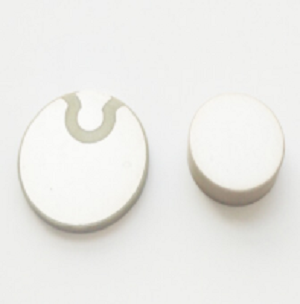
Why PZT Piezoelectric Ceramic Components Matter in Real Operating Conditions
PZT piezoelectric ceramic components are rarely chosen for theory alone. They are selected when precision, repeatability, and signal stability directly affect device performance in the field.
In practical systems, the same material may serve very different goals. One installation may need strong ultrasonic output, while another depends on weak signal detection with minimal drift.
That is why application context matters. Frequency range, load, mounting structure, temperature variation, liquid contact, and long-term cycling all change what “suitable” really means.
Well-made PZT piezoelectric ceramic components support this range of use because they combine electromechanical responsiveness with design flexibility. The material can be tuned for sensing, actuation, transmission, or measurement.
This is also where manufacturing capability becomes relevant. Consistent processing, stable polarization, and reliable batch control often determine whether a component performs well beyond the first prototype stage.
Weifang Jude Electronic Co. Ltd has built its reputation around that requirement. Its piezoelectric ceramics, sensors, ultrasonic piezo parts, and power transducers are used where accuracy and coherence must hold under demanding conditions.
Different Applications Change the Selection Logic
It is easy to group all piezo devices together, but real projects do not behave that way. Similar-looking assemblies can place very different demands on PZT piezoelectric ceramic components.
A high-frequency component usually emphasizes resonance control, dielectric behavior, and dimensional consistency. An ultrasonic welding stack pays more attention to output power, heat tolerance, and mechanical durability.
Measurement equipment introduces another layer. Flow meters, length measuring systems, and oil well tools often care more about signal clarity, calibration stability, and environmental resistance over time.
Underwater sound and sonar create yet another profile. There, acoustic transmission efficiency, pressure resistance, and long-duration reliability can outweigh simple catalog values.
The better approach is to judge the component by its working role inside the system, not by the material name alone. That avoids expensive redesign later.
A quick comparison of what changes by scenario
When High-Frequency Devices Need More Than Basic Material Performance
In high-frequency assemblies, PZT piezoelectric ceramic components are expected to behave predictably under narrow tolerances. Small deviation in geometry or polarization can shift response enough to affect system accuracy.
This matters in filters, resonant parts, and compact signal devices where the piezo element is only one part of a tightly coupled structure. Matching to circuitry is often as important as raw ceramic data.
A common mistake is selecting by nominal specification only. In actual use, soldering method, adhesive layer, housing stress, and vibration exposure can all alter the final operating response.
For this type of application, it helps to confirm batch consistency, resonant behavior after assembly, and tolerance retention over repeated thermal cycles before locking the design.
Ultrasonic Power Systems Put More Pressure on Durability
Ultrasonic welding, washing, and punching systems push PZT piezoelectric ceramic components in a different direction. Here, the material is not only sensing. It is driving energy into a mechanical process.
The judgment point becomes more physical. Power density, heat generation, preload handling, and fatigue resistance directly affect service life and energy efficiency.
This is where a technically strong supplier adds value. Manufacturing quality influences crack resistance, bonding stability, and coherent output across multiple units in the same transducer stack.
Projects often underestimate operating drift after long running cycles. A component that performs well during trial operation may behave differently once continuous use introduces heat and mechanical stress.
In these cases, prequalification should include duty cycle testing, amplitude stability checks, and verification under the actual clamping force used in production equipment.
Measurement Workflows Usually Depend on Stable Sensing, Not Just Sensitivity
Flow meters, liquid measurement devices, and length measuring systems often appear less aggressive than power ultrasonics, but the selection challenge is not necessarily easier.
In measurement, stable signal interpretation matters more than impressive standalone sensitivity. If the component changes behavior with temperature, pressure, or media condition, calibration becomes fragile.
That is one reason specialized solutions such as Ultrsonic flowmeter sensor for liquid measurement PZT ceramic manufacturer deserve closer attention when the sensing path involves liquid media.
The useful question is not only whether the sensor detects a signal. It is whether the sensor preserves repeatable response across fluid velocity changes, pipe materials, and long maintenance intervals.
Oil well measuring tools raise the bar further. Pressure variation, difficult access, and harsh environmental exposure make replacement costly, so long-term reliability becomes part of the original selection decision.
What to confirm before finalizing a measurement design
- Operating medium and whether acoustic coupling changes over time.
- Temperature range during startup, full load, and idle periods.
- Signal stability after sealing, mounting, and cable integration.
- Calibration retention after repeated field cycles.
- Replacement difficulty if the sensor sits inside a closed assembly.
Sonar and Fault Detection Need Clean Signals Under Harsh Conditions
Sensitive ultrasonic fault detection and underwater sound systems usually expose weak assumptions early. Signal quality must survive noise, distance, interface losses, and environmental instability.
For these systems, PZT piezoelectric ceramic components are judged by more than output. Resolution, bandwidth behavior, and directional performance can determine whether a defect is detected or missed.
Underwater applications also demand careful packaging. Even well-performing ceramics can lose practical value if sealing, acoustic matching layers, or structural integration reduce transmission efficiency.
A second hidden issue is coherence between units. In arrays or distributed detection points, variation from piece to piece can complicate tuning and reduce system-level confidence.
Where Selection Errors Usually Start
Most poor outcomes do not begin with a completely wrong material. They begin with an incomplete reading of the operating scene.
One frequent error is treating similar ultrasonic applications as identical. A cleaning transducer, a welding stack, and a flow sensor may all use piezo parts, yet their failure modes are very different.
Another is focusing on purchase price while ignoring maintenance intervals, replacement labor, or calibration downtime. In many systems, indirect cost quickly overtakes the initial component difference.
There is also a tendency to trust lab performance without checking the assembled device. Adhesives, preload, enclosure material, and electrical matching can significantly change final behavior.
With PZT piezoelectric ceramic components, specification sheets are important, but application fit is what determines useful life and stable output.
A Practical Way to Match the Component to the Job
A more reliable selection process starts with the working condition map. Define whether the component is sensing, transmitting, actuating, or switching between those roles during use.
Then confirm the limits that matter most. Frequency, pressure, thermal load, chemical contact, duty cycle, assembly stress, and maintenance access should be documented before comparing samples.
When the application involves liquid measurement, it is often useful to review a reference configuration such as Ultrsonic flowmeter sensor for liquid measurement PZT ceramic manufacturer to benchmark integration logic and sensing priorities.
From there, evaluate three things together: ceramic performance, assembly compatibility, and supplier process stability. Leaving out any one of them creates avoidable uncertainty later.
For systems expected to run for years, sample validation should include real operating cycles rather than short benchtop checks. That is especially true for high-frequency devices, ultrasonic power systems, and remote measuring equipment.
The most useful next step is to sort applications by load, environment, and measurement tolerance, then compare which PZT piezoelectric ceramic components remain stable under those exact conditions. That usually leads to a better decision than comparing catalog values alone.

Thank you very much for writing to us. Please leave your message and contact information, we will reply to you within 24 hours.