

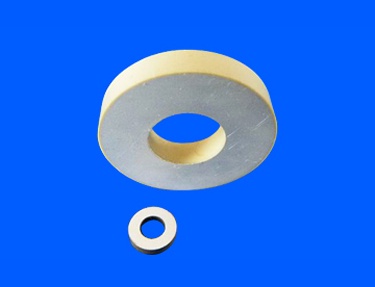
When technical evaluators search for guidance on PZT piezoelectric ceramic components, they are usually trying to answer a practical question: which parameters actually predict whether a part will perform reliably in a real device, not just pass a datasheet comparison. That matters because PZT selection is rarely isolated. It affects signal sensitivity, resonance behavior, power efficiency, thermal drift, service life, bonding strategy, and, in many cases, downstream calibration effort. A component that looks acceptable on nominal values alone can still create instability once it is mounted into a sensor, transducer, flow meter, ultrasonic stack, or high-frequency assembly.
The more demanding the application, the less useful a single “good piezo material” claim becomes. PZT is a family of materials and component formats, not one universal solution. For that reason, evaluation should focus on parameter relationships: electrical behavior versus mechanical loading, nominal performance versus temperature range, and material constants versus the actual operating mode of the assembly. A part that performs well in low-power sensing may be a poor fit for continuous ultrasonic actuation, and a ceramic optimized for high sensitivity may trade away mechanical robustness or long-term stability.
Start with the operating mode, not the catalog category
Before comparing values, the first step is to identify how the component works in the end system. PZT ceramics may operate in sensing, actuation, ultrasonic transmission, precision positioning, frequency control, or energy conversion roles. The relevant parameters shift depending on whether the ceramic is driven near resonance, used in quasi-static measurement, exposed to cyclic stress, or integrated into a bonded multi-layer structure.
In practice, evaluators should first clarify four conditions:
- Whether the component is primarily sensing or driving
- Whether operation is resonant or non-resonant
- Whether the load is intermittent, continuous, or high-duty-cycle
- Whether the environment includes heat, humidity, pressure, oil, immersion, or mechanical shock
This framing prevents a common mistake: selecting PZT piezoelectric ceramic components by highest apparent sensitivity or strongest output without checking whether those properties remain useful under the actual electrical and mechanical constraints of the device.
Piezoelectric constants are important, but only in context
The parameters most readers recognize first are the piezoelectric constants, especially d, g, k, and related coupling values. These are foundational, but they are often oversimplified in procurement or early design reviews.
The d coefficient describes the relationship between electric field and mechanical strain, or between applied force and generated charge, depending on operating mode. In practical terms, higher d values are often associated with stronger actuation or higher charge response. But “higher is better” is only partly true. A very high d constant does not automatically produce better system performance if the part also introduces higher dielectric loss, lower mechanical quality, or unstable resonance under temperature change.
The g coefficient is especially relevant for sensing applications where voltage output matters. In some measurement devices, a material with a more balanced d-g relationship may outperform one chosen only for large d values. This is why sensor designers often evaluate charge constant and voltage constant together rather than separately.
The electromechanical coupling factor, usually expressed as k, indicates how effectively the ceramic converts electrical energy to mechanical energy and back. For ultrasonic transducers and resonant devices, this can be a decisive parameter because it influences conversion efficiency, bandwidth, and drive behavior. However, coupling factor should be checked alongside mode shape and geometry. A favorable material constant on a test sample may not translate directly into the final component if dimensions, electrodes, mounting conditions, or prestress differ.
For technical assessment, the key question is not simply “What is the d33?” but “Which piezoelectric constant matters for the vibration mode and boundary condition of this part?”
Dielectric properties often decide whether performance is usable
Many real-world issues with PZT assemblies emerge from dielectric behavior rather than from the headline piezoelectric values. Three properties deserve close attention: dielectric constant, dielectric loss, and insulation resistance.
A high dielectric constant may support stronger electrical response under some conditions, but it also affects impedance matching, drive electronics, and noise characteristics. In sensing applications, this can influence front-end circuit design and signal conditioning requirements. In power ultrasonics, it affects how the driver sees the load.
Dielectric loss, often discussed as a dissipation factor or loss tangent, becomes particularly important under continuous AC excitation. Excessive dielectric loss can produce self-heating, reduced conversion efficiency, and drift during prolonged operation. In ultrasonic welding, cleaning, punching, or other power-intensive applications, this parameter is not secondary. It is often tied directly to whether the device maintains stable amplitude over time.
Insulation resistance is equally practical. In precision sensors or measurement instruments, poor insulation can degrade signal integrity, especially in humid or high-temperature conditions. If a supplier provides nominal insulation values without environmental test conditions, that data should be treated cautiously. The useful question is how resistance changes after thermal cycling, humidity exposure, or long storage, not just what it was at initial inspection.
Mechanical quality factor and loss behavior matter in ultrasonic systems
For resonant and high-power applications, the mechanical quality factor (Qm) often separates ceramics that survive industrial duty from those that only perform well in a lab sample. A high Qm usually indicates lower mechanical loss and stronger suitability for narrow-band, high-efficiency resonant operation. This can be valuable in powerful ultrasonic welding and related industrial uses where energy concentration and amplitude stability matter.
But even here, a simplistic preference for high Qm can mislead. High-Q materials may offer narrow operating bandwidth and may be less forgiving if the system resonance shifts during assembly, load variation, or temperature rise. If the end product experiences moving load conditions or requires a broader frequency response, evaluators should examine whether a lower-Q but more stable material gives better system-level behavior.
Mechanical loss also influences heat generation and fatigue behavior. In long-duration operation, the question is not only whether a component reaches target displacement, but whether it can do so repeatedly without growing unstable, depoling, cracking, or detuning.
Resonance and frequency stability are where many selections fail
Nominal resonant frequency is one of the most visible specifications for piezoelectric ceramic components, but it is also one of the easiest to misunderstand. A free-state test value is not the same as installed resonance. Once the ceramic is bonded, clamped, immersed, prestressed, or integrated into a metal structure, the effective frequency can shift materially.
That is why frequency-related evaluation should cover more than one data point:
- Resonant frequency and anti-resonant frequency
- Frequency tolerance at delivery
- Frequency drift versus temperature
- Frequency shift after bonding or assembly
- Stability under load and over operating time
In ultrasonic fault detection, sonar, flow meters, and precision length measuring, small shifts can have outsized consequences for signal quality, sensitivity, or calibration. The practical decision is whether the supplier’s frequency control capability matches the tolerance stack of the finished assembly. If the application window is narrow, batch consistency may matter more than a slightly better nominal material constant.
Mechanical strength is not a secondary check
PZT is a ceramic, and therefore inherently brittle compared with metals or polymers. That seems obvious, yet mechanical strength is still underweighted in many evaluations. For components that will be bolted, prestressed, bonded into metal housings, exposed to pressure pulses, or operated under high-amplitude vibration, flexural strength, compressive tolerance, and fracture behavior are central parameters.
What often causes field failures is not a single overload event but a combination of stress concentration, imperfect flatness, electrode edge defects, thermal mismatch, and cyclic excitation. In stacked or bonded transducer structures, even small dimensional variation can produce uneven force distribution. A technically sound review should therefore look beyond material data and ask:
- What are the dimensional tolerances and parallelism controls?
- How uniform are density and sintering quality across batches?
- Are edge chips, microcracks, or electrode defects screened out?
- What mounting method was assumed when mechanical data was generated?
Mechanical reliability becomes especially important in oil well measurement, underwater acoustics, and industrial cleaning systems, where field replacement is costly and the ceramic is only one part of a tightly integrated assembly.
Temperature behavior should be judged over the whole use range
Temperature performance is often reduced to Curie temperature in marketing language, but that is not enough for technical selection. Curie temperature marks the approximate point at which ferroelectric properties are lost, yet many practical performance problems occur well below that threshold.
Evaluators should check how the component’s key properties change across the real operating range: capacitance, piezoelectric output, dielectric loss, resonance, insulation resistance, and mechanical stability. In many systems, thermal drift matters more than absolute high-temperature survival. A part may remain functional but still lose enough stability to compromise measurement accuracy or ultrasonic efficiency.
It is also useful to distinguish between short-term exposure and continuous operation. Some PZT materials can tolerate brief temperature peaks but show accelerated aging or polarization loss under sustained elevated temperature. If test conditions are not clearly stated, claims about “high temperature resistance” should be treated as incomplete.
Aging and long-term stability deserve more attention than they usually get
PZT properties change over time. Aging is not necessarily a defect; it is a known material behavior. The issue is whether the rate and variability of change are compatible with the application. In measurement and sensing devices, long-term drift can lead to recalibration burden, output deviation, or threshold errors. In resonant power systems, aging can contribute to frequency mismatch and efficiency loss.
The most useful questions here are practical:
- How long after polarization were the published values measured?
- What tolerance is guaranteed at shipment versus after storage?
- Is there data for thermal cycling, humidity aging, or high-drive aging? 【待核实】
- Does the supplier define stabilization procedures before final test?
This matters because two suppliers may list similar room-temperature values while differing substantially in long-term consistency. For a technical evaluator, stability of delivered behavior is usually more valuable than a slightly stronger initial number.
Geometry, electrodes, and processing quality change the result
Material selection alone does not define component performance. For PZT piezoelectric ceramic components, geometry, electrode quality, polarization uniformity, and machining precision can materially alter the usable outcome. Rings, discs, plates, tubes, and custom structures behave differently under electrical drive and mechanical constraint. Thickness, diameter ratio, and electrode pattern influence resonant mode purity and field distribution.
Electrode adhesion and uniformity also matter more than many buyers expect. Poor electrode processing can increase contact resistance, degrade solderability or bonding reliability, and create local stress or uneven excitation. For thin or precision parts, surface finish and flatness directly affect how consistently the ceramic couples into adjoining structures.
When evaluating samples, technical teams should avoid treating the ceramic as an isolated material coupon. The more useful exercise is to inspect whether the supplier’s processing control supports the final assembly method, whether that means adhesive bonding, prestressed stacking, immersed operation, or high-frequency integration.
Batch consistency and process control are part of the technical specification
For many B2B applications, the real problem begins after prototype approval. A sample lot can perform well while production lots show broader spread in capacitance, resonance, impedance, or sensitivity. That is why batch consistency should be considered a performance parameter in its own right.
Consistency depends on powder preparation, formulation control, sintering uniformity, polarization process, electrode deposition, machining, and final inspection discipline. Even when a supplier is technically capable, uncontrolled variation at any of these stages can widen system tuning effort downstream.
Technical evaluators should ask for distribution data where possible, not only nominal values. Useful indicators include:
- Capacitance tolerance across a lot
- Frequency distribution and sorting capability
- Impedance variation at target operating conditions
- Sensitivity or output spread in application-relevant fixtures
- Reject criteria for visual and dimensional defects
This is where manufacturing strength becomes relevant in a non-promotional way. A supplier with established ceramic processing capability and broad application experience may be better positioned to maintain coherence between batches, especially for parts used in ultrasonic transducers, fault detection systems, or measurement instruments where tuning margins are tight. Companies such as Weifang Jude Electronic, which operate across sensing, ultrasonic, and industrial transducer applications, may be referenced during benchmarking for that reason, but the decision should still rest on verified process stability and part-to-part consistency rather than on application lists alone.
Application matching is more important than pursuing the highest specification
One of the most persistent misconceptions in this field is that the component with the strongest headline values is the most advanced option. In reality, the best choice is the one whose parameter set matches the operational profile of the device.
A few typical examples show the tradeoff:
- For precision sensing, lower drift and higher insulation may matter more than maximum actuation coefficient.
- For high-power ultrasonics, Qm, heat resistance, and fatigue behavior may outweigh broad coupling advantages.
- For flow meters or underwater acoustics, frequency consistency and environmental sealing compatibility may be more important than nominal room-temperature sensitivity.
- For high-frequency components, dimensional precision and mode control can dominate over bulk material claims.
This is why experienced evaluators usually compare candidate ceramics against the assembly’s failure modes, not just against each other. The right question is: which parameter, if it drifts or varies, will break system performance first?
What to ask for when datasheets are not enough
Many datasheets provide a useful starting point but leave out conditions that determine real suitability. When technical risk is meaningful, additional evidence is reasonable to request. That may include test method definitions, impedance curves, temperature-dependent data, aging curves, environmental reliability results, dimensional capability, and lot-to-lot variation records. For critical use cases, sample evaluation in the actual mounting structure is often more informative than any standalone material table.
If standards or certifications are relevant to the end market, they should also be checked case by case. Requirements can vary by device type, export destination, and end-use environment, and should be confirmed directly rather than assumed from generic supplier statements. Any claims around compliance, environmental restrictions, or industry-specific qualification should be treated as application-dependent unless documented. 【待核实】
In the end, evaluating PZT components is less about finding the “best ceramic” than about reducing uncertainty between nominal material behavior and installed system performance. The teams that make better decisions are usually the ones that read the parameters as interacting constraints, not as isolated sales numbers. That is where selection stops being a catalog exercise and becomes real engineering judgment.

Thank you very much for writing to us. Please leave your message and contact information, we will reply to you within 24 hours.