

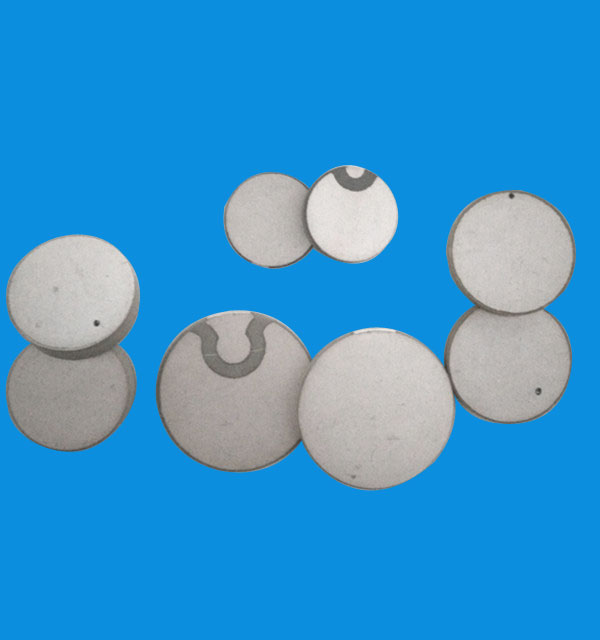
Selecting the right pzt piezoelectric ceramic components is rarely about choosing the highest force or the lowest price. For project managers and engineering leaders, the core search intent behind this topic is practical: how to choose a component that will deliver precise motion, remain stable over time, integrate cleanly into the system, and reduce project risk.
The main concern for this audience is decision quality. They need to know which specifications actually matter, how application conditions affect material and geometry selection, what supplier capabilities indicate reliability, and where hidden risks usually appear in procurement and integration.
The most useful content, therefore, is not a broad explanation of piezoelectric theory. What helps most is a decision framework: how to match actuation requirements to material behavior, how to evaluate environmental and electrical constraints, how to compare component formats, and how to judge manufacturing consistency and support capability.
This article focuses on those practical selection issues. It emphasizes performance criteria, integration concerns, lifecycle reliability, and supplier evaluation. General background on piezoelectric principles is kept brief because project stakeholders usually need actionable guidance more than textbook definitions.
Why Selection Quality Matters in Precision Actuation Projects
In precision actuation, component choice directly affects positioning accuracy, response speed, repeatability, power consumption, and service life. A piezo element that performs well in a lab setup may still create problems in production equipment if preload, drive conditions, or environmental exposure are not considered early.
For project managers, this is not only a technical issue. It affects delivery timelines, integration effort, maintenance planning, field reliability, and ultimately the total cost of ownership. Choosing suitable pzt piezoelectric ceramic components at the specification stage prevents redesign cycles that often surface much later in validation or deployment.
This is especially important in systems such as ultrasonic equipment, measurement instruments, precision dispensing, flow monitoring, sensing assemblies, and underwater acoustic devices. In these applications, small deviations in material consistency or actuator behavior can produce large downstream effects in system output.
Start with the Real Actuation Requirement, Not the Component Catalog
A common mistake is to begin selection from standard part listings instead of application targets. The better starting point is the motion task itself: required displacement, generated force, response frequency, stroke resolution, duty cycle, and allowable hysteresis. These factors determine what kind of piezo ceramic configuration is realistic.
If the application needs very small but highly repeatable motion, then stability and linearity may matter more than peak displacement. If the system must drive a mechanical load, then blocking force, stiffness, and mounting structure become more critical than a headline voltage-to-stroke value.
Project leaders should also define whether the actuator works in continuous operation, burst mode, or intermittent activation. This matters because thermal accumulation, dielectric stress, and fatigue behavior vary with operating pattern. A component that looks acceptable under short test conditions may become unreliable in long-cycle industrial use.
At this stage, the most effective purchasing question is simple: what exact motion result must the system achieve under real load and environmental conditions? Without that answer, comparing part numbers is mostly guesswork.
Which Technical Parameters Matter Most When Comparing PZT Piezoelectric Ceramic Components
Not every specification carries equal weight. For precision actuation projects, the most important parameters typically include displacement constant, force capability, resonant characteristics, capacitance, operating voltage, temperature stability, and mechanical dimensions. These define how the ceramic behaves once integrated into the actual assembly.
Displacement and force must be evaluated together. A piezo element may provide attractive free displacement, but once mechanical load is applied, usable movement can shrink significantly. Teams should request loaded performance data whenever possible instead of relying only on open-condition values.
Capacitance matters because it influences driver design, power demand, and response behavior. For high-frequency actuation, electrical matching becomes important. If the driver and piezo are poorly matched, the system may suffer from slow response, unstable output, or avoidable heating.
Resonance is another key factor, particularly in ultrasonic or fast dynamic applications. The operating frequency must remain compatible with the component’s mechanical and electrical behavior. A mismatch can reduce efficiency, create unwanted vibration modes, and shorten service life.
Dimensional tolerance should not be treated as a minor detail. In precision assemblies, variation in thickness, flatness, electrode quality, or bonding surfaces can affect preload consistency and installation yield. For managers overseeing scale-up, this directly impacts manufacturing repeatability.
Material Properties Should Match the Application Environment
PZT materials are not all interchangeable. Different formulations are optimized for different performance priorities, such as higher sensitivity, stronger drive capability, better stability, or improved resistance under specific operating conditions. Material choice should follow the application, not habit.
For example, an actuator working in a stable indoor measurement device may prioritize fine control and repeatability. A component used in industrial ultrasonic equipment may need stronger power handling and durability. An underwater or oil-well related application may place greater emphasis on reliability under pressure, humidity, or temperature variation.
Temperature is one of the most overlooked selection factors. Piezoelectric behavior shifts with temperature, and extreme conditions can degrade performance or depolarize the ceramic if limits are exceeded. If the equipment sees fluctuating thermal loads, ask for temperature-related performance data, not just room-temperature values.
Humidity, contamination, and mechanical shock also deserve early review. In harsh environments, electrode protection, sealing methods, bonding compatibility, and insulation quality can all affect long-term function. These are often supplier capability issues as much as component design issues.
Choose the Right Component Structure for the Motion Task
The term pzt piezoelectric ceramic components covers many forms, including discs, plates, rings, tubes, stacks, and customized transducer structures. Selection becomes easier when teams think in terms of motion mode and system architecture rather than only material grade.
Discs and rings are often used in ultrasonic generation, sensing, and vibration-related systems. Plates may be more suitable for bending or planar actuation arrangements. Tubes can support fine positioning or fluid handling functions in certain designs. Stacks are commonly chosen where higher force and controlled micro-displacement are required.
The right geometry depends on how the actuator transfers energy into the mechanism. If the motion path is axial, a stack-style structure may be more effective. If the design relies on resonance or surface vibration, a disc or ring may be more appropriate. The best choice is the one that fits the physical operating principle of the full device.
From a project perspective, structural compatibility also affects packaging, wiring, mounting, and maintenance. A theoretically ideal ceramic element can still be the wrong choice if it complicates assembly or creates unacceptable tolerance sensitivity in production.
Integration Risk Usually Sits at the Interface, Not the Datasheet
Many performance problems do not come from the ceramic element alone. They appear at the interface between the piezo component, the driver, the mounting structure, the adhesive or preload system, and the surrounding mechanics. This is why component selection should always include integration review.
Electrical drive conditions must be checked carefully. Required voltage range, waveform type, current demand, insulation margin, and switching frequency all influence whether the actuator will perform as expected. A mismatch here can produce reduced stroke, unstable response, or premature failure.
Mechanical mounting is equally important. Piezoelectric ceramics are strong in compression but relatively brittle under tension or impact. Poor clamping, uneven stress, or inappropriate bonding can introduce cracking risk or drift. Project teams should confirm how the part is intended to be mounted before freezing the design.
Ask suppliers for application guidance, recommended preload ranges, bonding suggestions, and packaging precautions. Strong technical suppliers can usually help identify integration risks before tooling or production release. That support is often more valuable than a marginally lower unit price.
How to Evaluate Reliability and Manufacturing Consistency
For engineering managers, consistency across batches is often more important than one excellent sample. Precision actuation systems depend on predictable behavior, and variability in piezoelectric constants, capacitance, resonance, or geometry can force recalibration, lower yield, or create field performance spread.
This is why supplier evaluation should go beyond catalog data. Review whether the manufacturer has stable process control, suitable testing capability, and experience supplying components for industrial or specialized technical applications. Good documentation and traceability are strong signals of production maturity.
It is also worth asking how the supplier verifies polarization quality, electrode integrity, dimensional accuracy, and acoustic or electrical performance. In applications involving ultrasonic welding, measurement systems, flow meters, sonar, or sensitive detection, test discipline matters because the end use is performance-critical.
Weifang Jude Electronic Co. Ltd, for example, manufactures piezoelectric ceramics used in high-frequency components, powerful ultrasonic welding, washing, punching, ultrasonic fault detection, measuring devices, flow meters, underwater sound, and sonar-related fields. This range of application experience is relevant because it suggests familiarity with both precision requirements and demanding operating environments.
What Project Managers Should Ask a Piezo Material Supplier Before Approval
Procurement decisions are stronger when teams ask a focused set of technical and commercial questions. The first group should cover fit: which material and structure are recommended for the target load, frequency, voltage, displacement, and environmental conditions. The second group should cover evidence: what test data supports that recommendation.
The third group should cover manufacturing control. Ask about dimensional tolerances, batch consistency, inspection methods, lead times, customization capability, and change control. If the project may scale into volume production, these issues become central to schedule confidence and cost predictability.
The fourth group should cover engineering support. Can the supplier assist with prototype optimization, driver matching, mounting advice, or failure analysis if early tests reveal instability? For many projects, this support determines whether integration stays on schedule.
Finally, ask about practical risk points: what operating conditions most often cause failure, what storage and handling rules apply, and what design mistakes should be avoided. Serious suppliers are usually direct about these limitations, and that transparency is useful.
Balancing Performance, Cost, and Long-Term Project Value
It is tempting to reduce selection to unit price, especially during early budgeting. In practice, the lowest-cost component can become the most expensive if it increases tuning time, causes driver redesign, lowers assembly yield, or fails under field conditions. Precision actuation projects are usually more sensitive to reliability than to small purchase-price differences.
The better approach is to compare total project value. Consider engineering time, prototype iterations, validation effort, replacement risk, and expected service life alongside part cost. A more consistent component from an experienced supplier often lowers overall project burden even when its nominal price is higher.
This is particularly true for systems with strict uptime or calibration requirements. If the equipment supports production lines, measurement tasks, or mission-critical sensing, stability and repeatability have direct business value. Managers should treat piezo component quality as a project control variable, not just a sourcing line item.
A Practical Selection Framework for Faster, Better Decisions
A useful decision sequence is straightforward. First, define the actual motion requirement under load, including force, stroke, response speed, duty cycle, and precision target. Second, map those needs to a suitable material type and component structure. Third, verify environmental compatibility and electrical drive conditions.
Fourth, review integration factors such as mounting, preload, wiring, adhesive choice, and packaging space. Fifth, evaluate supplier consistency, test capability, and technical support. Sixth, validate with prototypes under realistic operating conditions rather than idealized bench tests.
This sequence helps teams avoid one of the most common mistakes in piezo projects: selecting a promising component too early and discovering later that the wider system cannot support it properly. A disciplined selection process reduces this risk and improves project confidence.
Conclusion
Choosing pzt piezoelectric ceramic components for precision actuation is ultimately a system-level decision. The best component is the one that matches the real motion requirement, performs reliably under actual operating conditions, integrates cleanly with the driver and mechanics, and comes from a supplier capable of consistent quality.
For project managers and technical leaders, the practical takeaway is clear. Focus first on loaded performance, environmental fit, structural compatibility, manufacturing consistency, and supplier support. When those factors are evaluated together, piezoelectric ceramic selection becomes less of a procurement gamble and more of an engineering decision with measurable project value.
In demanding applications, that difference matters. It improves precision, reduces integration surprises, shortens development cycles, and supports long-term reliability across the lifecycle of the equipment.

Thank you very much for writing to us. Please leave your message and contact information, we will reply to you within 24 hours.