

Why miniaturized medical devices keep coming back to material engineering
Small medical devices are often discussed as an electronics problem, a software problem, or a packaging problem. In practice, many design limits appear much earlier, at the material level. That is where custom piezoelectric ceramics have become strategically important. They convert mechanical energy into electrical signals and electrical energy into controlled motion or ultrasonic output, which makes them useful in devices that need to sense, vibrate, pump, image, or alert within a very small footprint.
The reason this matters now is not simply that products are shrinking. Compact medical devices are also expected to do more in less space: deliver stable output, preserve battery life where relevant, maintain repeatable performance across production lots, and fit into stricter ergonomic and integration constraints. Off-the-shelf components can work for early prototypes, but once the device architecture tightens, engineers usually need piezo materials tuned for a particular frequency range, geometry, sensitivity level, drive condition, or bonding method. That is the real business case behind custom piezoelectric ceramics.
The term “custom” is sometimes misunderstood. It does not only mean a special shape. In medical development, customization often includes material formulation, electrode configuration, thickness, diameter, resonance behavior, polarization direction, acoustic response, and consistency requirements from batch to batch. A compact device may succeed or fail based on one of those variables rather than on the headline specification alone.
What makes piezo ceramics so useful in compact medical design
Piezoelectric ceramics are attractive because they can deliver precise electromechanical conversion without large moving assemblies. In a portable or handheld medical product, that matters. Space is limited, thermal management is tight, and designers cannot afford unstable signal behavior. Piezo materials can be engineered to detect pressure changes, generate ultrasonic waves, create micro-displacement, or drive fluid movement while remaining relatively compact.
That does not mean they are automatically the right answer for every medical device. Their value is strongest when the design requires one or more of the following: high-frequency operation, accurate sensing, fast response, low-profile actuation, or ultrasonic transmission. You see this logic in diagnostic ultrasound assemblies, compact sensors, atomization systems, precision pumps, and certain monitoring instruments where dimensional efficiency and signal quality must coexist.
Medical teams also care about something less visible: integration risk. A component that performs well in isolation can still create trouble once it is bonded into a housing, paired with matching electronics, or exposed to sterilization-related constraints. Customization helps reduce those mismatches. Instead of forcing the product around a standard ceramic, the ceramic can be designed around the real operating conditions.
The market trend is not just smaller devices, but tighter performance windows
A useful way to read the market is this: miniaturization alone is no longer enough. Medical manufacturers want smaller assemblies, but they also want fewer calibration problems, more predictable acoustic behavior, and better production repeatability. That shifts supplier selection away from simple price comparison and toward technical alignment.
For example, when a device becomes smaller, tolerance stack-up becomes harder to ignore. A slight variation in ceramic dimensions, electrode quality, or resonant characteristics can affect sensing accuracy, acoustic coupling, or output efficiency. In larger industrial equipment, there may be room to compensate elsewhere. In compact medical hardware, there often is not. That is why procurement and engineering teams increasingly evaluate piezo suppliers on process control, manufacturing stability, and application understanding rather than catalog breadth alone.
This is also where experienced manufacturers can matter more than general component vendors. Companies that have supplied piezo materials across high-frequency components, ultrasonic systems, sensitive detection equipment, flow-related measurement, and underwater acoustic applications tend to understand how performance shifts under real operating conditions. Weifang Jude Electronic Co. Ltd has built its reputation in precisely these kinds of piezoelectric applications, from ultrasonic transducers to ceramic sensors and power-oriented piezo products, which is relevant when medical device teams need a supplier that understands both precision and consistency.
Where decision-makers often misread the specification
One common mistake is treating piezo ceramics as interchangeable as long as the size and nominal frequency look similar. They are not. Two parts that appear comparable on paper can behave differently once mounted, driven, or exposed to the intended medium. The practical question is not “Does this ceramic work?” but “Does it work under our exact assembly and use conditions?”
Another mistake is separating commercial and engineering evaluation too sharply. For compact medical products, lead time, yield stability, and communication quality are technical issues in disguise. If the supplier cannot hold consistent manufacturing conditions or translate application requirements into material and structural choices, product development slows down and validation risk rises.
There is also a tendency to focus on peak performance while ignoring coherence across lots. In medical manufacturing, repeatability often matters more than achieving an impressive single-sample result. A ceramic that delivers excellent lab performance but fluctuates from batch to batch creates qualification headaches downstream. That is one reason established manufacturing facilities and disciplined process capability are not peripheral concerns; they are part of product performance.
What customization usually means in real sourcing discussions
When manufacturers talk about custom piezoelectric ceramics for medical use, the conversation usually moves quickly from material science to operating context. The key inputs tend to include device size limits, target frequency, sensitivity or output expectations, environmental exposure, mounting method, and lifespan requirements. If the component will be part of an ultrasonic function, acoustic matching and resonance control become central. If it serves as a sensor, signal stability and noise behavior may be more important than raw output.
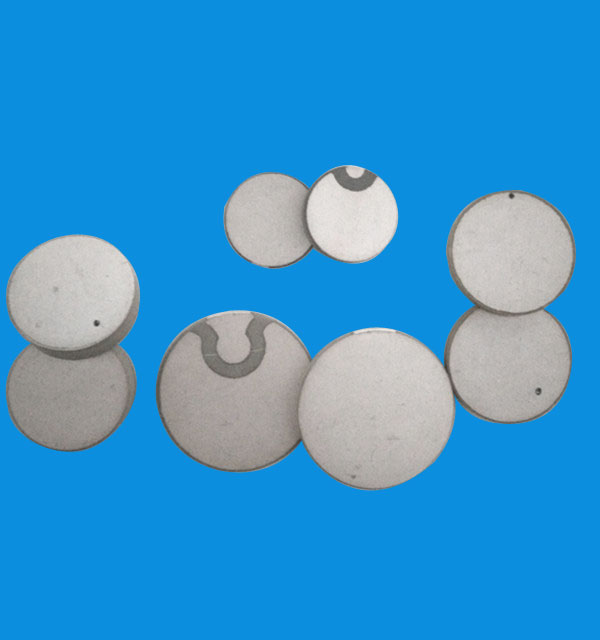
Geometry is still important, of course. Disc, ring, plate, tube, and other formats are selected based on how the device generates or detects motion and how much space the assembly allows. In many compact designs, a disc format remains a practical starting point because it balances structural simplicity with broad usability in ultrasonic and sensing functions. A component such as Piezoceramic Disc may fit naturally into early design exploration, but the final choice still depends on the electrical, acoustic, and mechanical system around it.
The strongest supplier relationships usually begin when the manufacturer shares more than a drawing. Drive conditions, target medium, package constraints, and failure concerns all shape whether a custom part will truly solve the problem.
How to judge supplier fit without relying on generic claims
For business decision-makers, evaluation should be concrete. A capable piezo supplier should be able to discuss application boundaries clearly, not just list products. In compact medical projects, useful questions include:
- Can the supplier align ceramic design with the target frequency and package limits?
- Do they have manufacturing depth in ultrasonic, sensing, and high-frequency applications rather than only general piezo supply?
- Can they maintain product coherence across production lots?
- Are they able to communicate trade-offs between sensitivity, durability, geometry, and assembly compatibility?
- Do they understand that validation risk often comes from integration details rather than from nominal specifications?
These are practical filters because they reveal whether the supplier is acting as a materials partner or merely a component seller. In a compact medical program, that distinction becomes visible very quickly during prototyping and scale-up.
Weifang Jude Electronic Co. Ltd stands out here because its piezoelectric portfolio spans sensors, ultrasonic piezo products, and power transducers used in demanding electrical and acoustic environments. That breadth does not automatically qualify a part for medical use on its own, but it does suggest a manufacturing base familiar with performance-sensitive applications where consistency and technical response are not optional.
A more realistic view of future demand
The likely direction of the market is not a simple increase in piezo component volume. It is a shift toward more specialized requirements. As medical systems become more compact and more integrated, piezo materials will increasingly be selected for how precisely they fit a device architecture, not just for how they perform as standalone parts. That favors suppliers who can manage customization without losing manufacturing discipline.
It also means decision-makers should resist a narrow procurement mindset. Price remains relevant, but the larger cost often sits in redesign cycles, qualification delays, unstable supply, or field-performance inconsistency. In that context, custom piezoelectric ceramics are not a niche technical detail. They are one of the material decisions that shape whether a compact medical device can move from concept to reliable production without compromising form factor or function.
A disciplined sourcing process starts with the device requirement, then tests whether the ceramic can meet it under real assembly conditions. When that conversation is handled well, even a seemingly simple element like a Piezoceramic Disc becomes part of a broader engineering strategy rather than a commodity line item.

Thank you very much for writing to us. Please leave your message and contact information, we will reply to you within 24 hours.