

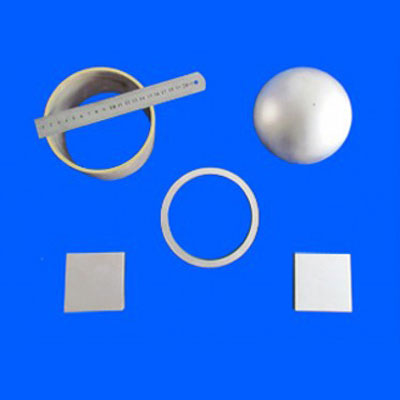
Piezoelectric Ceramics Supplier Checklist for Stable Quality
Choosing a reliable piezoelectric ceramics supplier is critical for stable quality, predictable performance, and dependable delivery.
For procurement decisions, the right supplier affects scrap rates, field reliability, lead times, and total ownership cost.
That matters even more in ultrasonic systems, sensors, transducers, and high-frequency components.
A capable piezoelectric ceramics supplier should offer more than parts.
It should bring process control, application knowledge, traceability, and consistent support across the full supply cycle.
Why Stable Quality Matters So Much
Piezoelectric materials are performance-sensitive by nature.
Small differences in composition, sintering, polarization, or machining can change output, resonance, sensitivity, and lifetime.
In practical purchasing, unstable batches usually create hidden costs before they create obvious failures.
You may see delayed assembly, extra incoming inspection, tuning problems, or warranty risk.
This is why evaluating a piezoelectric ceramics supplier should focus on long-term consistency, not only unit price.
Checklist Item 1: Raw Material and Formula Control
Start with the material system.
A qualified piezoelectric ceramics supplier should clearly explain material grades, key electrical properties, and batch consistency methods.
Check whether the supplier can document:
- Powder source stability
- Formula control and revision records
- Lot identification and traceability
- Incoming material verification
- Property range control for each grade
If a supplier cannot discuss these basics clearly, stable quality will be hard to trust.
Checklist Item 2: Manufacturing Capability and Process Discipline
The next step is manufacturing strength.
A dependable piezoelectric ceramics supplier should control forming, sintering, machining, electrode coating, and polarization in-house or through qualified systems.
Ask practical questions such as:
- Are critical parameters standardized and recorded?
- How are dimensional tolerances maintained?
- What controls prevent cracking or uneven polarization?
- How are process deviations handled?
- Can the line support volume growth without quality drift?
A mature process usually shows up in repeatability.
That repeatability is often more valuable than a low initial quote.
Checklist Item 3: Product Range and Application Fit
Not every piezoelectric ceramics supplier is equally strong across all applications.
Some suppliers are better in sensors.
Others have deeper experience in ultrasonic power transducers, high-frequency components, welding systems, measuring equipment, or underwater acoustics.
This is where application history becomes useful.
Weifang Jude Electronic Co. Ltd supplies piezoelectric ceramics for sensors, ultrasonic piezo devices, transducers, and related electrical functions.
Its products have been used in ultrasonic welding, washing, punching, fault detection, flow meters, length measuring, oil well measuring, and sonar applications.
For buyers, that kind of application breadth can reduce qualification risk when new projects expand.
Checklist Item 4: Testing, Reliability, and Documentation
A serious piezoelectric ceramics supplier should prove quality with data, not only claims.
Review the supplier’s ability to provide:
- Electrical property reports
- Resonance and impedance data
- Dimensional inspection records
- Reliability or life test evidence
- RoHS or compliance statements where required
- Certificates tied to shipment lots
Consistency in documentation often reflects consistency in manufacturing.
It also speeds internal approval, vendor qualification, and incoming inspection.
Checklist Item 5: Engineering Support Before and After Order Placement
A good piezoelectric ceramics supplier helps prevent problems early.
That means discussing operating frequency, drive conditions, mounting structure, temperature range, and target output before production starts.
When engineering support is weak, buyers often receive technically correct parts that still perform poorly in real assemblies.
A responsive supplier should answer specification questions quickly and recommend suitable structures or material grades.
For standard formats, a product like Piezoelectric Ceramic Plate may be relevant when design teams need a flat, adaptable ceramic element.
Checklist Item 6: Delivery Reliability and Supply Continuity
Supply instability can erase any price advantage.
So evaluate whether the piezoelectric ceramics supplier can meet lead time commitments under normal and peak demand.
Useful checkpoints include:
- Average lead time for samples and mass orders
- Buffer stock strategy for common items
- Capacity planning visibility
- Packaging protection for fragile ceramics
- Corrective action for late or damaged shipments
This area matters especially for production lines with tight schedules and limited substitute options.
Checklist Item 7: Total Cost, Not Just Purchase Price
Cost-focused sourcing should still look at the full picture.
The cheapest piezoelectric ceramics supplier may become the most expensive after rework, downtime, returns, or unstable field performance.
A practical cost review should include:
This approach makes supplier comparison more realistic and easier to defend internally.
How to Shortlist a Piezoelectric Ceramics Supplier
When comparing options, use a simple decision path:
- Confirm the supplier matches your application type.
- Review process control and traceability.
- Request test data and sample evaluation.
- Check delivery capability and communication speed.
- Compare total procurement cost across repeated orders.
From a purchasing perspective, this method keeps the evaluation grounded in measurable risk.
It also helps separate a capable piezoelectric ceramics supplier from a trading source with limited technical depth.
Final Buying Takeaway
A strong piezoelectric ceramics supplier should deliver stable material performance, disciplined manufacturing, useful technical support, and reliable lead times.
Those factors usually matter more than a narrow focus on price.
Companies with solid manufacturing facilities and broad application experience can reduce procurement risk significantly.
For buyers reviewing ultrasonic and sensing projects, supplier quality should be verified through data, process discipline, and real application fit.
If a project needs adaptable ceramic formats for transducer or sensor design, Piezoelectric Ceramic Plate can be one useful reference during evaluation.
Use this checklist to compare each piezoelectric ceramics supplier carefully, then move forward with the one that can support quality, continuity, and long-term cost control.

Thank you very much for writing to us. Please leave your message and contact information, we will reply to you within 24 hours.