

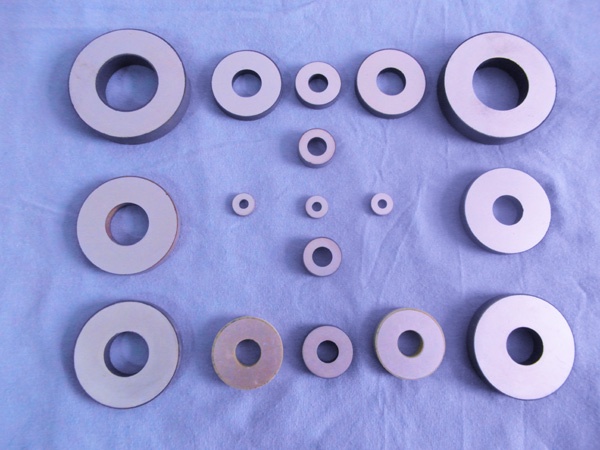
Why do tolerances affect piezoelectric ceramics price so much?
Because tolerance is not just a drawing note. In piezoelectric ceramics, tighter tolerance usually means more control points across the whole manufacturing flow: material preparation, forming, sintering, machining, electrode application, poling, sorting, and final inspection. That extra control adds labor, scrap risk, test time, and often lower yield.
A lot of sourcing teams begin with material grade and order quantity when comparing piezoelectric ceramics price. Those matter, but tolerance can move unit cost faster than buyers expect. A part with standard dimensional limits may run smoothly in production. The same part with very tight flatness, capacitance consistency, or resonant frequency control can become a different cost structure altogether.
For business evaluation work, the practical question is simple: are you paying for precision that your end product really needs, or are you carrying unnecessary cost because the specification was copied from an older design?
Which tolerances usually increase unit cost the most?
Not all tolerances have the same pricing impact. In most purchase reviews, the biggest cost drivers are dimensional consistency tied to assembly fit, electrical parameter matching, and performance screening.
- Thickness tolerance: This often matters more than outer diameter or length because it can influence capacitance, resonance behavior, and how the part works in an acoustic or sensing stack.
- Flatness and parallelism: These add machining and inspection burden, especially for bonded assemblies or ultrasonic applications.
- Capacitance or resonant frequency range: Tight electrical grouping usually requires broader production sorting and more rejected pieces outside the target band.
- Pair or batch matching: If your device needs components matched to each other rather than only meeting individual limits, the supplier’s usable yield may drop sharply.
- Cosmetic and electrode finish requirements: These look minor on paper, but they can slow output if the acceptance standard is stricter than the functional need.
If a supplier quotes a higher price, the right follow-up is not “Why is your price high?” It is “Which tolerance items are reducing yield or adding inspection time?” That question gets you to the real cost driver much faster.
Is tighter tolerance always better for procurement decisions?
No. Tighter tolerance is only better when it protects system performance, downstream yield, or field reliability. If it does not do one of those jobs, it is just cost.
This is where many evaluations go wrong. A drawing can carry inherited limits that made sense for a prototype, a legacy tool, or a different assembly method. Once those limits enter the RFQ, every supplier prices against them. Procurement then compares quotes without asking whether the tolerance still creates value.
A more useful review starts with three checks:
- Which tolerance affects final device performance?
- Which tolerance only helps assembly convenience?
- Which tolerance is there because nobody removed it from an old file?
That last category is where avoidable cost often hides.
What should a buyer look at on the drawing before asking for quotes?
Before comparing piezoelectric ceramics price across suppliers, review the drawing and specification like a cost document, not just a technical document. Buyers do not need to redesign the part, but they do need to know what will force a premium.
If the RFQ package does not make these distinctions, suppliers usually protect themselves with a higher quote.
Why do identical materials still come back with different prices?
Because the material name alone does not tell you how hard the part is to make. Two suppliers may both offer piezoelectric ceramic parts based on similar material families, yet price them differently due to manufacturing route, screening depth, equipment capability, and how much process loss they expect under your tolerances.
One supplier may quote on the assumption of normal production spread. Another may assume your tight capacitance range will force heavy sorting. That is why quote comparisons need context. A low unit price can mean the supplier has interpreted the tolerances more loosely, or has excluded tests that another supplier included.
For teams assessing suppliers such as Weifang Jude Electronic Co. Ltd, the meaningful comparison is not only “price per piece,” but also “what process discipline and inspection burden are embedded in that piece price?”
At what point do tolerances start causing scrap and yield problems?
There is no universal threshold you can apply across all piezoelectric ceramic products. The tipping point depends on geometry, material behavior during sintering, whether post-machining is needed, and how many electrical parameters must land inside the target window at the same time.
What procurement teams can do is ask for a process-based explanation. If the supplier says a tolerance is expensive, ask which stage creates the loss:
- forming variation,
- sintering shrinkage control,
- machining time,
- poling consistency,
- or final sorting yield.
That answer tells you whether the premium is technically grounded or just commercial padding.
How can business evaluation teams compare quotes fairly?
Use the same checklist for every quote. Without that discipline, one supplier may appear cheaper simply because the scope is narrower.
Ask each supplier to state, in writing, the following points:
- tolerance items included in the quote,
- inspection items and sampling approach,
- whether sorting or matching is included,
- whether the quote is based on prototype, pilot, or volume production conditions,
- and which specification fields would change the price if tightened later.
This matters even more when the end item is part of an ultrasonic assembly. For example, when evaluating a component line that may connect to products such as ultrasonic acoustic transducer A-50K, quote clarity around frequency-related screening and dimensional fit becomes more important than a small difference in base piece price.
Can loosening tolerances reduce cost without creating performance risk?
Often, yes. But only if you loosen the right tolerance. Broadly relaxing the drawing is a bad move. Targeted relaxation can be very effective.
A sensible approach is to separate tolerances into three groups: must-hold, useful-but-flexible, and legacy constraints. The second and third groups are where cost optimization usually happens. A slightly wider outer dimension may have no effect if the assembly uses compliant bonding. A slightly broader capacitance range may be harmless if the electronics already calibrate signal variation. On the other hand, relaxing thickness or resonance-related control in an ultrasonic device can create expensive downstream instability.
The point is not to ask for “cheaper tolerance.” The point is to identify which precision requirement truly protects the end use.
What documents should be requested before approving a supplier on cost grounds?
If price is under review, request documents that show how the supplier understands your specification. The most useful ones are usually the technical drawing confirmation, inspection scope, quoted tolerance assumptions, and sample test records tied to the exact part revision.
Do not settle for a generic product catalog when the RFQ is tolerance-sensitive. A catalog proves product range; it does not prove the commercial quote reflects your actual control limits. If a supplier offers alternative tolerance bands with corresponding prices, that is valuable. It gives procurement a real cost-performance map instead of a single number with no decision path behind it.
What are the most common buying mistakes around piezoelectric ceramics price?
The first is treating all tolerances as equally necessary. They are not.
The second is comparing quotations line by line without checking whether the same electrical screening and dimensional verification are included.
The third is pushing for lower price after freezing an over-specified drawing. At that point, the supplier has little room except to challenge quality, lead time, or inspection depth.
Another frequent mistake is reviewing cost too late. Once a transducer or sensor assembly is already validated around a narrow performance band, changing tolerances becomes much harder. Cost review works best before final sourcing lock-in, when engineering and procurement can still discuss what really needs control.
So what is the practical rule when assessing price?
Look at tolerance as a purchased capability. If a requirement reduces assembly failure, protects acoustic performance, or stabilizes measurement accuracy, paying more may be justified. If it does none of those things, it is a candidate for redesign or requoting.
The strongest purchasing decision is usually not the lowest quote. It is the quote backed by clear tolerance logic, clear inspection scope, and a specification that matches the actual job of the ceramic part.

Thank you very much for writing to us. Please leave your message and contact information, we will reply to you within 24 hours.