

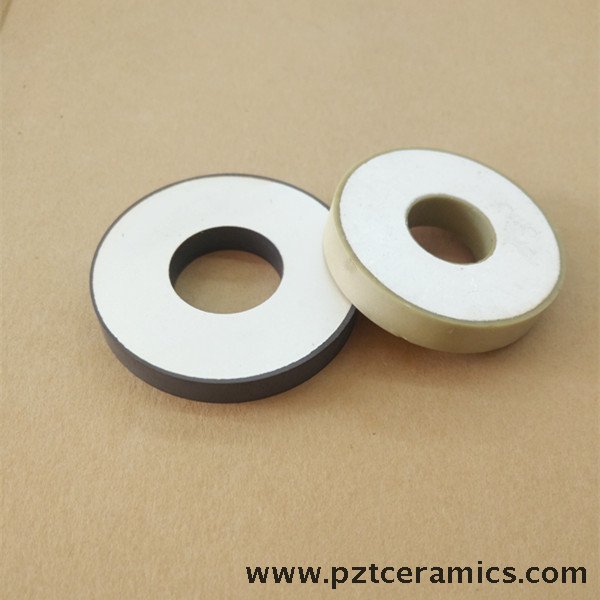
Comparing a piezoelectric ceramics manufacturer is rarely a simple pricing exercise. The right choice affects signal accuracy, power stability, production reliability, and service life across demanding applications.
That matters even more when components are used in ultrasonic welding, sensing, flow measurement, oil well tools, or underwater acoustic systems. In these cases, material variation can become a business risk.
A useful evaluation starts with performance consistency, then moves into manufacturing strength, technical support, and evidence from real application environments. A capable supplier should help reduce uncertainty, not add to it.
What You Are Really Comparing
A piezoelectric ceramics manufacturer does more than produce parts to a drawing. It supplies material behavior, process control, and application understanding that directly influence final system performance.
Piezoelectric ceramics convert electrical energy into mechanical motion and mechanical input into electrical signals. That dual function makes them essential in sensors, actuators, transducers, and ultrasonic assemblies.
Because these products operate in precise and sometimes harsh conditions, the manufacturer’s role extends beyond basic fabrication. Powder formulation, sintering discipline, electrode quality, and polarization control all matter.
In practice, two suppliers may quote similar specifications while delivering very different long-term results. This is why a technical and commercial comparison needs depth.
Consistency Is Often More Valuable Than a Single High Number
Many evaluations focus first on headline parameters such as dielectric constant, coupling coefficient, or resonance frequency. Those numbers matter, but consistency between batches matters more.
A reliable piezoelectric ceramics manufacturer should show controlled variation, traceable testing, and repeatable production outcomes. Stable output reduces recalibration, assembly loss, and field failure exposure.
When reviewing samples, it helps to ask whether measured values come from ideal laboratory pieces or from normal production lots. This distinction can reveal the real maturity of the process.
- Batch-to-batch uniformity in electrical and mechanical properties
- Dimensional tolerance control for assembly stability
- Electrode adhesion and surface quality
- Aging behavior after polarization and storage
- Test records that match shipped production
Manufacturing Depth Tells You More Than a Catalog
A catalog can list rings, discs, plates, sensors, and ultrasonic piezo elements. It cannot prove whether the supplier has the process strength to maintain quality across those forms.
This is where production capability becomes a serious comparison point. Strong manufacturing facilities usually indicate better control over raw material preparation, forming, sintering, machining, and final inspection.
Weifang Jude Electronic Co. Ltd presents a useful reference case. Its business scope covers piezoelectric ceramics, piezoelectric components, ceramic sensors, ultrasonic piezo products, and power transducers for varied electrical functions.
That breadth matters because it suggests the supplier is not limited to one narrow product family. It also points to manufacturing experience across multiple performance demands and geometry requirements.
When comparing any piezoelectric ceramics manufacturer, look for signs of technical strength behind the product list. Broad capability only has value when supported by disciplined production and quality assurance.
Questions that reveal factory maturity
- Can the supplier explain process controls for sintering and polarization?
- Are inspection methods defined for resonance, capacitance, and mechanical integrity?
- Is customization routine or treated as an exception?
- Can the factory support both prototype and volume production?
Application History Should Match the Risk Level of Your Project
A strong piezoelectric ceramics manufacturer usually has experience in applications where failure is costly or measurement quality is critical. That history deserves close attention during evaluation.
For example, products used in high-frequency components, powerful ultrasonic welding, washing systems, punching equipment, and sensitive fault detection must perform under different stress profiles.
The same applies to length measuring, oil well measuring, flow meters, underwater sound, and sonar. These are not generic use cases. They require reliability under vibration, pressure, temperature variation, or signal sensitivity demands.
A supplier with proven exposure to these fields is often better prepared to discuss matching materials to actual operating conditions. That shortens validation cycles and improves confidence in scale-up decisions.
Product Range Can Signal Technical Flexibility
Product breadth is not valuable by itself. It becomes valuable when it reflects material knowledge, design flexibility, and the ability to adapt solutions to different structures.
This is where it helps to review how the supplier positions specialized products inside its broader portfolio. A component should fit the application logic, not just fill a catalog page.
For instance, a project involving complex acoustic transmission may call for a composite structure rather than a conventional ceramic-only format. In that context, Piezoelectric Composite Material Transducer can be a relevant reference point during technical comparison.
Used this way, product review becomes part of supplier assessment. It shows whether the piezoelectric ceramics manufacturer understands how material design connects with end-use requirements.
Commercial Reliability Also Needs Evidence
Technical quality alone does not complete the comparison. Delivery discipline, communication clarity, and documentation quality are equally important in a business evaluation.
A dependable piezoelectric ceramics manufacturer should be able to support quotation accuracy, specification alignment, sample tracking, and controlled production scheduling. These factors directly affect project timing.
It is also worth checking whether the supplier can explain failure modes and corrective actions. Clear responses usually indicate real production knowledge rather than sales-only familiarity.
- Response speed during technical discussion
- Clarity of drawings, data sheets, and tolerances
- Willingness to share application references
- Ability to manage quality issues with traceability
- Stability of lead times across repeat orders
A Practical Way to Compare Suppliers
A structured comparison works best when technical and commercial factors are reviewed together. That keeps the process grounded in business impact rather than isolated specifications.
Build the comparison around five checkpoints
- Define the operating environment before requesting samples
- Compare batch consistency, not just sample performance
- Review manufacturing capability behind the quoted part
- Check evidence from similar applications and load conditions
- Score documentation, lead time, and support responsiveness
This approach usually produces a more accurate ranking than a simple cost table. It also makes internal review easier because each decision point can be explained and defended.
Turning Comparison Into a Better Decision
The best piezoelectric ceramics manufacturer for one program may not be the best choice for another. Performance targets, geometry, environment, and service expectations change the answer.
What remains constant is the need for evidence. Look for stable product quality, manufacturing discipline, broad enough application experience, and credible support when conditions become less predictable.
A supplier with a reputation for quality, reliability, and product coherence should earn attention, especially when it can connect those strengths to real ultrasonic, sensing, measurement, or sonar applications.
The next useful step is to compare shortlisted suppliers against your actual operating parameters, sample requirements, and expected volume path. That turns general evaluation into a decision framework that can hold up over time.

Thank you very much for writing to us. Please leave your message and contact information, we will reply to you within 24 hours.