

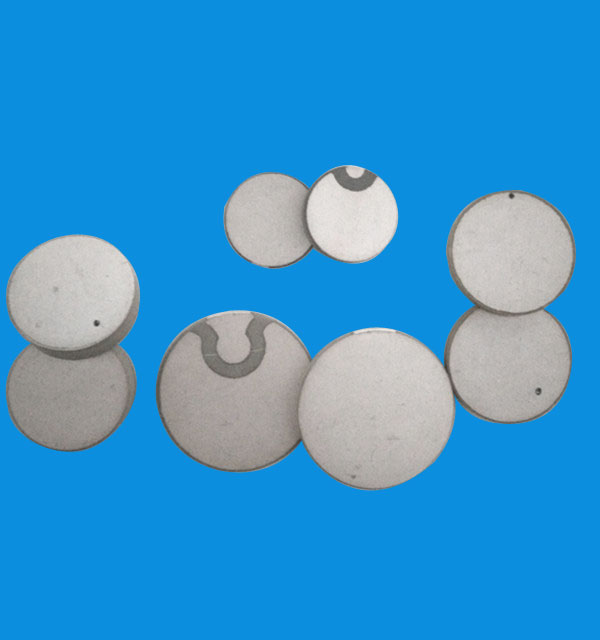
How Ultrasonic Piezoelectric Ceramics Affect Cleaning Efficiency
When an ultrasonic cleaning line underperforms, people often blame the tank design, the detergent, or the generator settings. Those factors matter, but the more stubborn problems usually start at the transducer level. Ultrasonic piezoelectric ceramics determine how electrical energy turns into mechanical vibration, and that conversion decides whether cavitation is strong and uniform or weak and erratic. In practical terms, they influence whether oil lifts out of blind holes, whether polishing compound leaves micro-parts completely, and whether a cleaning cycle stays repeatable after months of production instead of only during factory acceptance.
That is why ultrasonic piezoelectric ceramics should be judged as working components inside a system, not as isolated material pieces. A cleaning machine can still run with mediocre ceramics, but the signs show up quickly on the floor: slow degreasing, dead zones near the basket corners, unstable current draw, rising bath temperature, and a widening gap between nominal cycle time and actual throughput. Managers who have dealt with these issues know that cleaning efficiency is rarely just about raw power. It is about usable acoustic energy reaching the contaminated surface in the right frequency range and holding there long enough to do useful work.
Where efficiency is really won or lost
In heavy-duty washing, such as metal parts with oil, carbon residue, or machining chips, the first requirement is not delicacy but stable cavitation intensity. If the ceramic element cannot maintain consistent amplitude under load, cleaning power drops long before the generator reaches its rated output. Operators may respond by increasing cycle time or chemical concentration, which raises operating cost without fixing the root problem. Good ceramics improve energy transfer efficiency and reduce that compensation behavior. They help the machine clean with the acoustic field it was designed to produce, not with emergency adjustments made after commissioning.
The picture changes with precision cleaning. Electronics housings, fine medical components, optical parts, and small valves often require contamination removal without surface damage. Here, stronger is not automatically better. Piezoelectric behavior affects frequency response and vibration stability, which in turn shapes cavitation bubble size and collapse behavior. Ceramics with poor consistency can create uneven acoustic zones, where one section of the basket is barely cleaned while another sees aggressive local action. That imbalance is one of the less obvious reasons why parts come out visually clean yet fail downstream assembly or leak testing.
This is also why frequency selection should never be separated from ceramic quality. Lower-frequency systems are generally chosen when contamination is stubborn and part geometry is robust. Higher-frequency systems are often preferred when the soil is fine and the surface or feature size is more sensitive. But the ceramic has to support that operating window with stable electromechanical performance. A frequency label on the machine tells only part of the story; the behavior of the transducer under continuous load matters more than the nominal rating on a datasheet.
What site conditions change the result
The same ultrasonic cleaning system can perform very differently from one plant to another because the ceramics are exposed to different thermal cycles, liquid chemistries, duty patterns, and mounting conditions. In batch operations, repeated start-stop cycles place one type of stress on the transducer assembly. In continuous lines, thermal build-up and long operating hours expose another. If the piezoelectric ceramics are not well matched to those conditions, efficiency drifts gradually. It may not look like a failure at first. The line still runs, but cleaning margin disappears.
Temperature is a frequent source of misunderstanding. Many teams evaluate cleaning performance only after the bath reaches its target operating range, yet transducer behavior over the entire warm-up period can affect throughput. If ceramic performance shifts too much with temperature, early baskets clean differently from later ones. In high-volume work, that inconsistency becomes a quality issue rather than a maintenance note. Chemical exposure matters as well. The ceramic itself is only part of the assembly, but its reliability is tied to bonding quality, sealing, and how the transducer package handles alkaline or solvent-based environments over time.
Mounting discipline is another point that rarely gets enough attention. Even high-quality ceramics can deliver disappointing results if bonding layers are uneven, backing mass is mismatched, or the tank wall transmits vibration poorly. That is why experienced suppliers do not talk only about material grade. They discuss the whole path from ceramic element to acoustic output. Companies with broad exposure to piezo components across washing, fault detection, flow measurement, underwater sound, and high-frequency electrical applications tend to understand this systems view better, because they have seen the same material behave very differently depending on structural integration.
A practical way to compare cleaning applications
This kind of comparison is more useful than asking whether one ceramic is simply “better.” Better for what load, what frequency, what liquid, what duty cycle, and what quality threshold? Those are the questions that determine cleaning efficiency in real projects.
Why consistency often matters more than peak output
Buyers sometimes focus on initial amplitude or power density because those are easier to discuss than long-term stability. On the production floor, though, consistency usually has greater value. A transducer built with well-controlled ultrasonic piezoelectric ceramics can hold performance closer to its intended operating point across repeated cycles. That reduces the need for constant retuning and lowers the chance that maintenance staff will compensate for one issue by creating another. A line that needs frequent parameter correction is rarely efficient, even if its peak cleaning power looks impressive during a short demo.
This is one reason manufacturers with established ceramic processing capability tend to have an advantage. Weifang Jude Electronic Co. Ltd, for example, works across multiple piezoelectric product categories, including ceramic sensors, ultrasonic piezo elements, and power transducers used in washing, welding, high-frequency components, measurement, and sonar-related applications. That range does not automatically prove suitability for every cleaning system, but it does suggest familiarity with the tradeoff between power, sensitivity, durability, and signal stability across different operating environments. In ultrasonic cleaning, those tradeoffs are real, and oversimplifying them usually leads to selection mistakes.
An interesting side note is that experience from non-cleaning applications can still inform cleaning design decisions. For example, when a supplier also supports sensing and flow-related piezo assemblies such as China Piezoelectric Ceramic Flow Sensor, it often indicates process familiarity with response accuracy, environmental durability, and stable signal conversion. The engineering priorities are not identical to ultrasonic washing, but they overlap in the areas of material control and electromechanical reliability.
Questions worth asking before choosing a ceramic solution
The most useful customer questions are usually very plain. Will this line clean faster at the same quality level, or just draw more power? How much variation is acceptable from the first hour of operation to the eighth? Is the contamination film soft, baked-on, particulate, or mixed? Are the baskets densely loaded or lightly staged? Is the target simply visual cleanliness, or is the cleaned surface entering bonding, coating, or sealing processes where residual contamination becomes more expensive?
Those questions help separate ceramic selection from generic equipment purchasing. They also reveal when efficiency problems are being misdiagnosed. If parts clean well near the center of the tank and poorly at the edges, the issue may involve acoustic distribution rather than inadequate detergent. If the cycle gradually lengthens over several weeks, degradation or assembly fatigue may be more relevant than operator error. If a system works for machined steel but not for thin aluminum or delicate assemblies, the problem may lie in the interaction between frequency behavior, part geometry, and contamination type rather than in “insufficient power.”
For teams comparing suppliers, a useful evaluation approach is to ask for discussion around service life expectations, matching strategy between generator and transducer, thermal behavior, and integration method, not just rated frequency and power. The strongest technical conversations usually come from suppliers willing to talk about failure modes as directly as they talk about nominal performance.
That is ultimately how ultrasonic piezoelectric ceramics affect cleaning efficiency: not by one headline number, but by how steadily they convert energy, how well they fit the cleaning duty, and how gracefully they hold performance under real plant conditions. If the application is critical, the right next step is to review contamination type, part geometry, bath chemistry, operating temperature, and duty cycle together before locking the transducer configuration. That is where better cleaning results usually start.

Thank you very much for writing to us. Please leave your message and contact information, we will reply to you within 24 hours.